
Last updated November 2, 2026
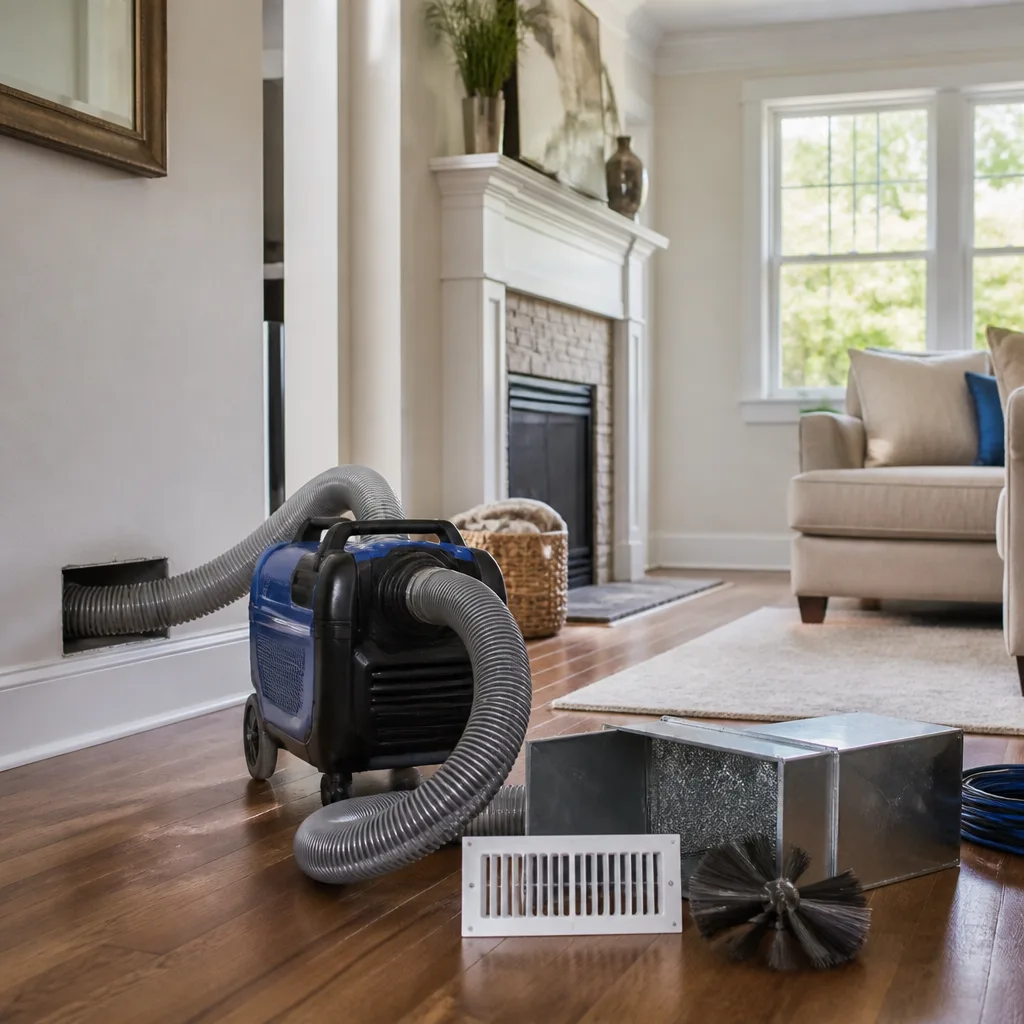 Whole-home duct cleaning
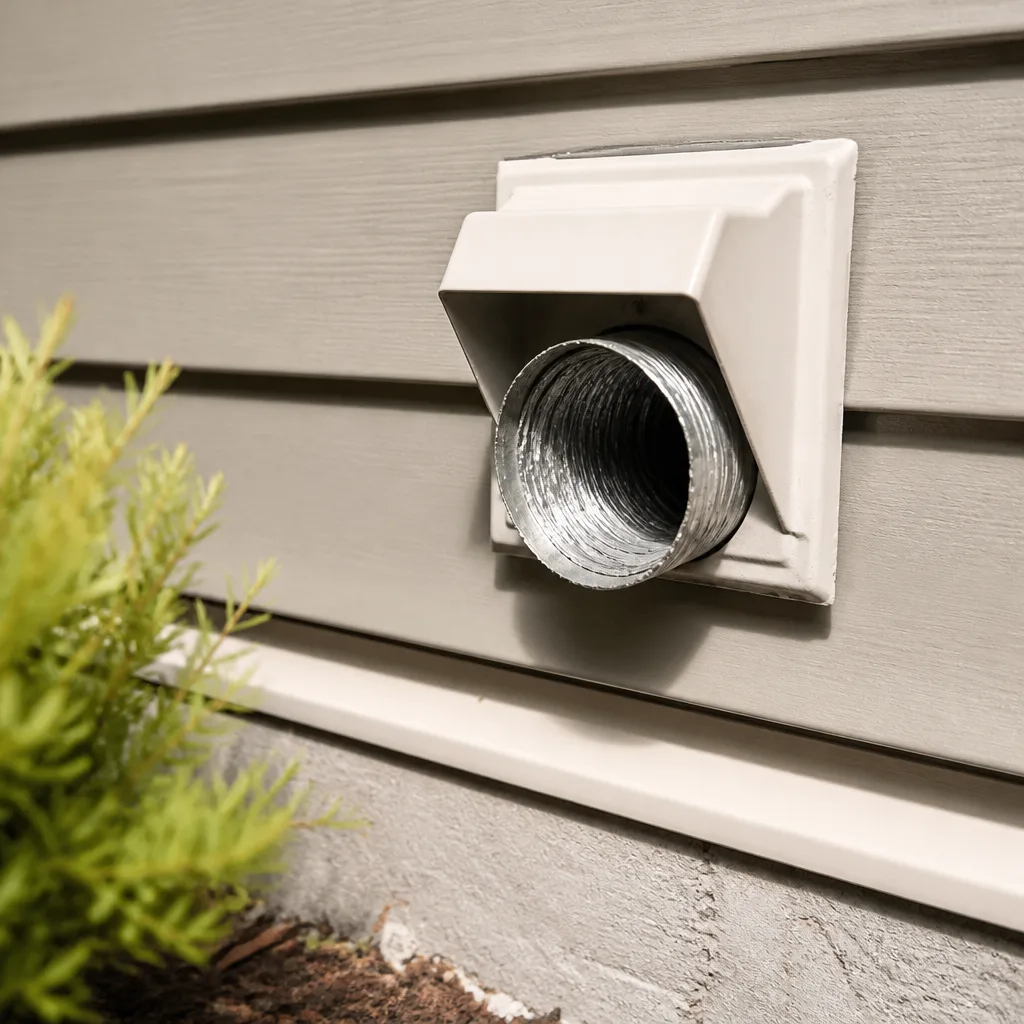 Dryer vent cleaning
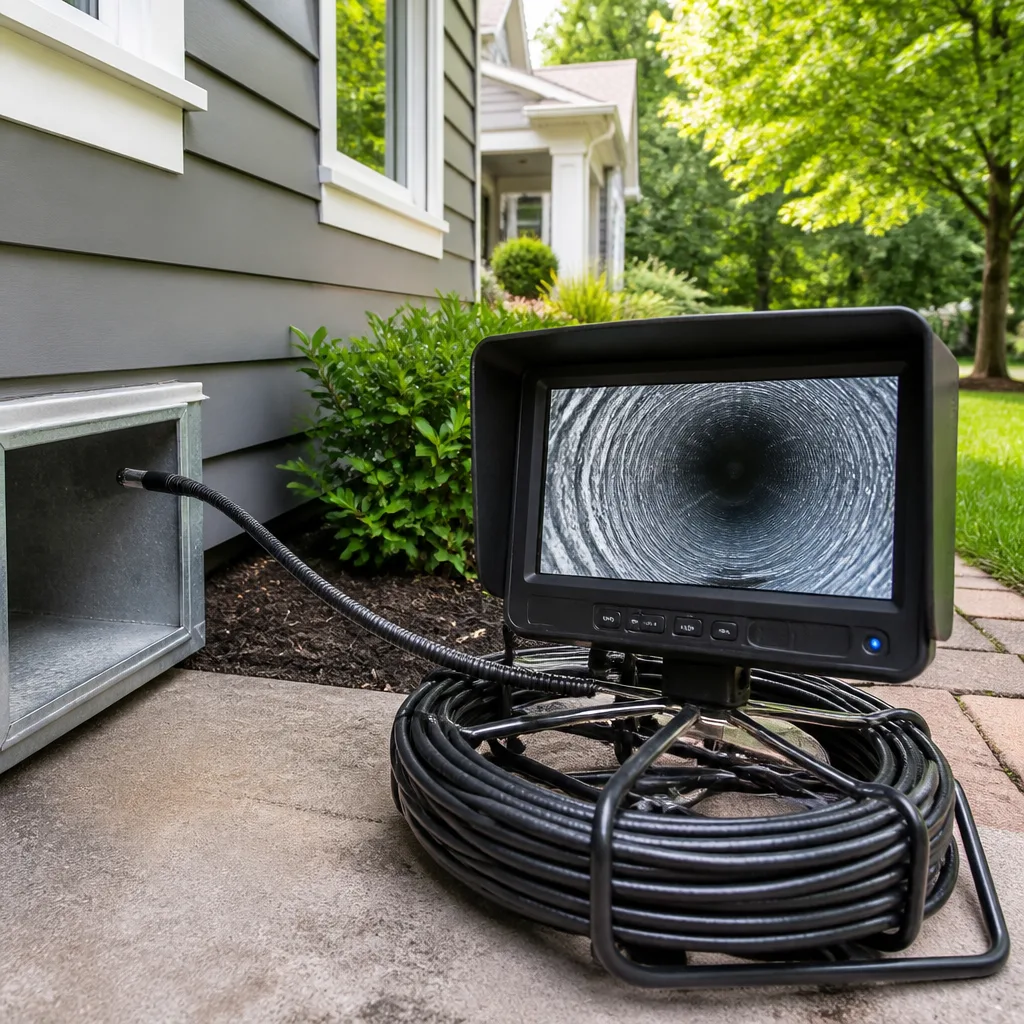 Camera inspection
 Sanitizing & deodorizing
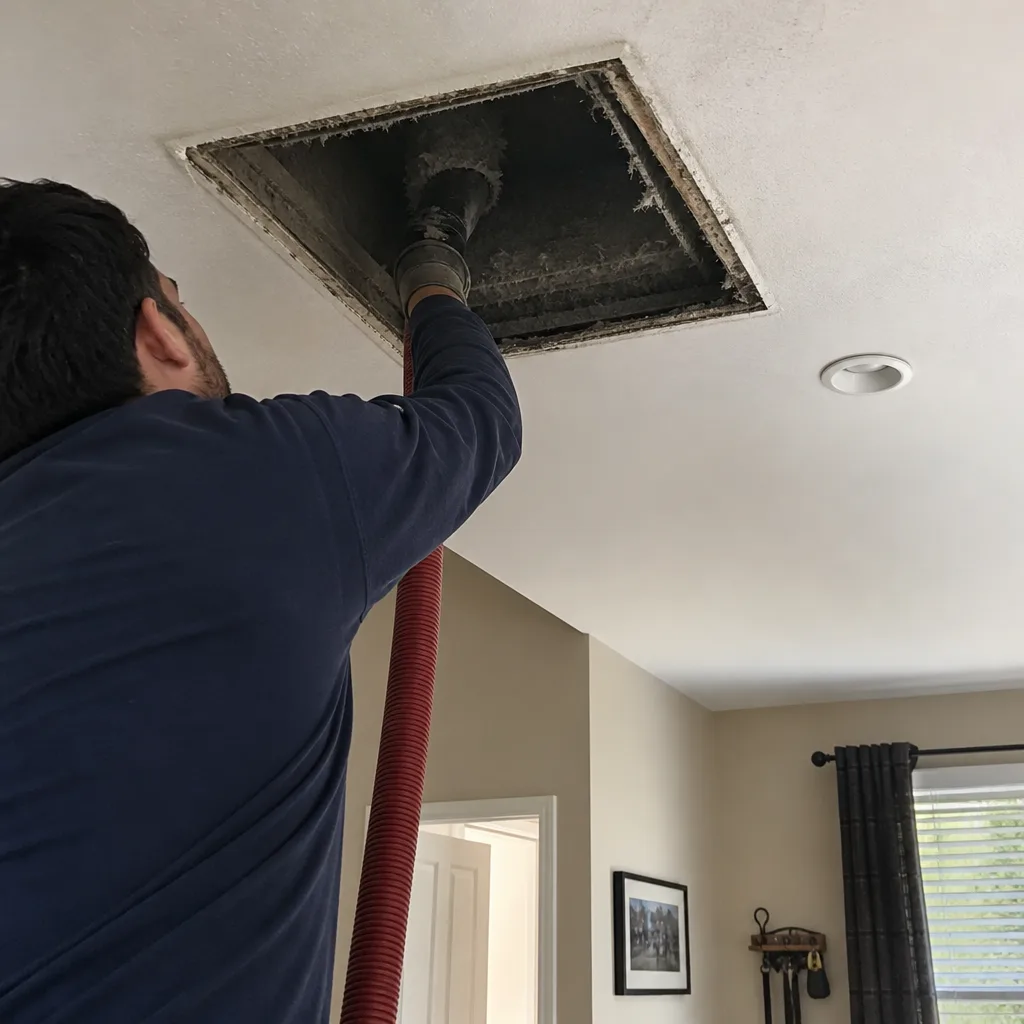
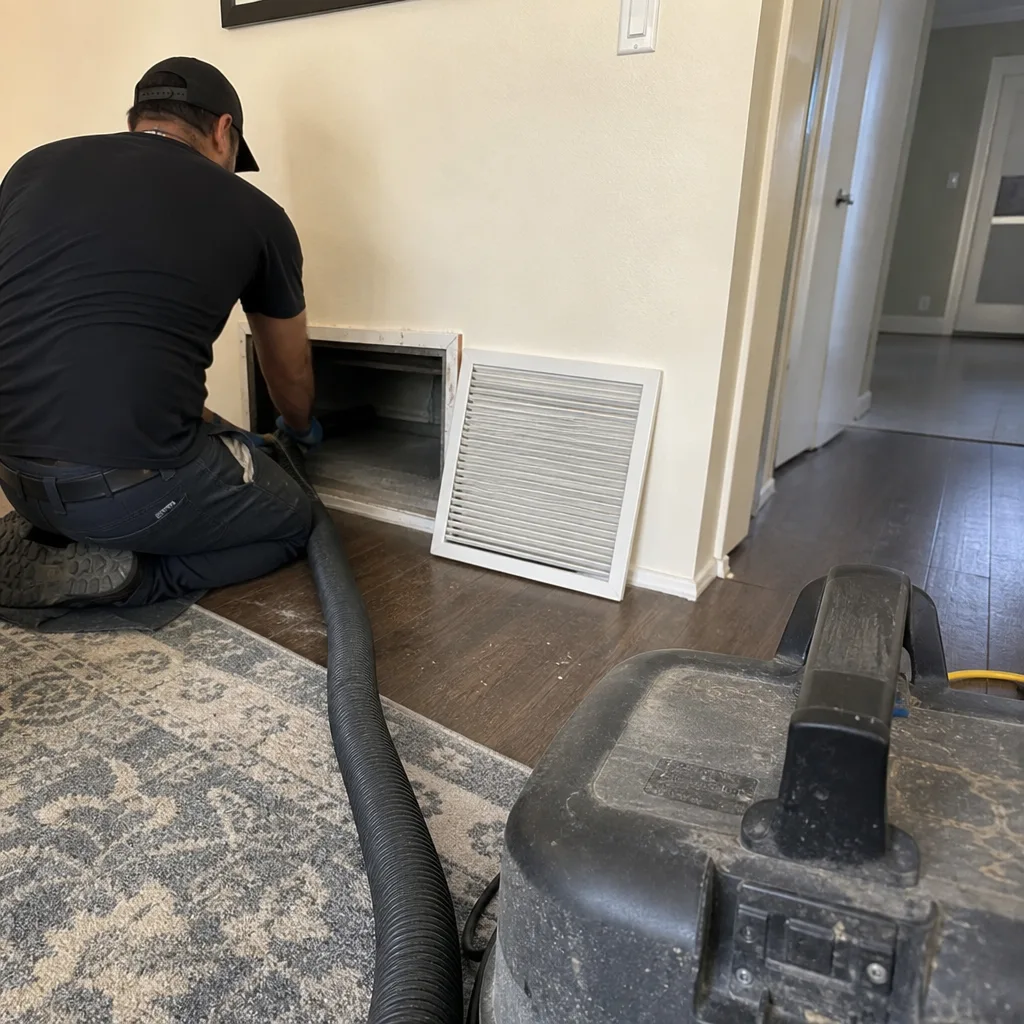
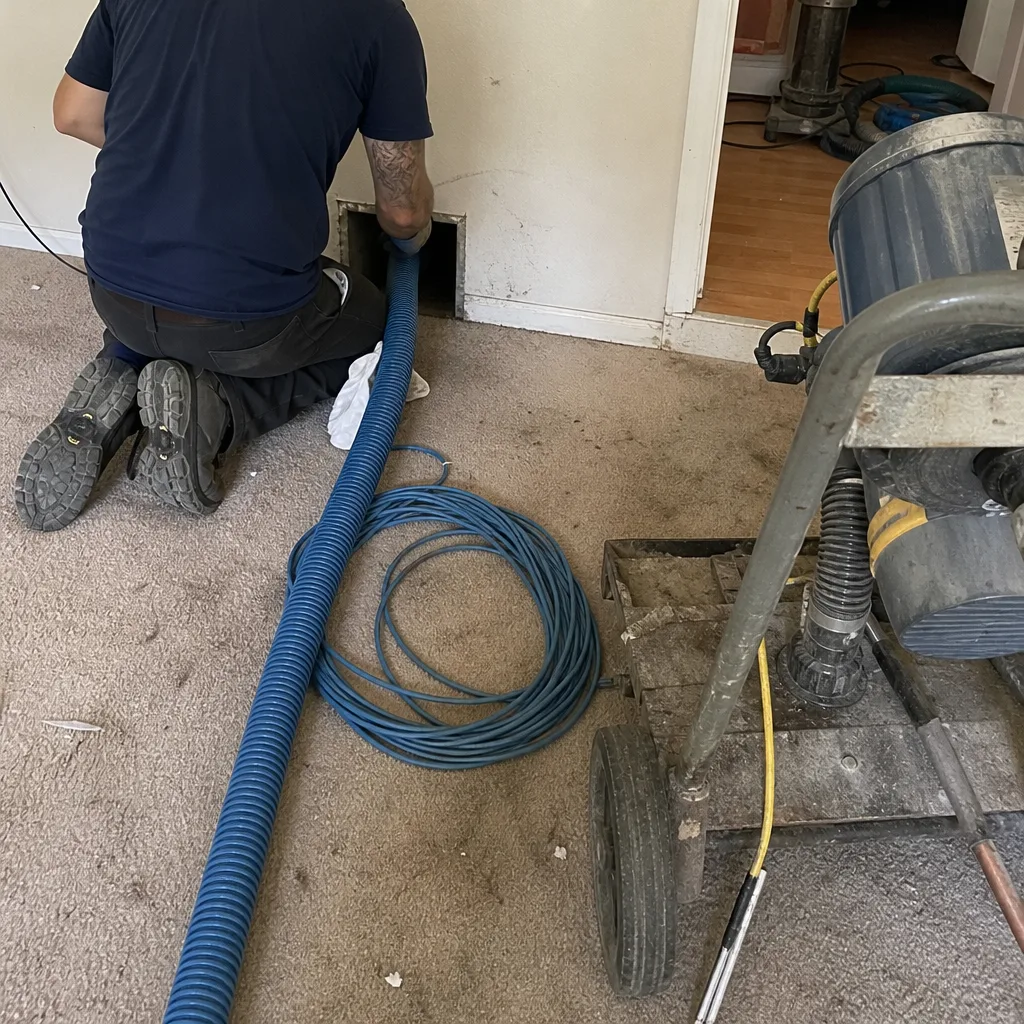
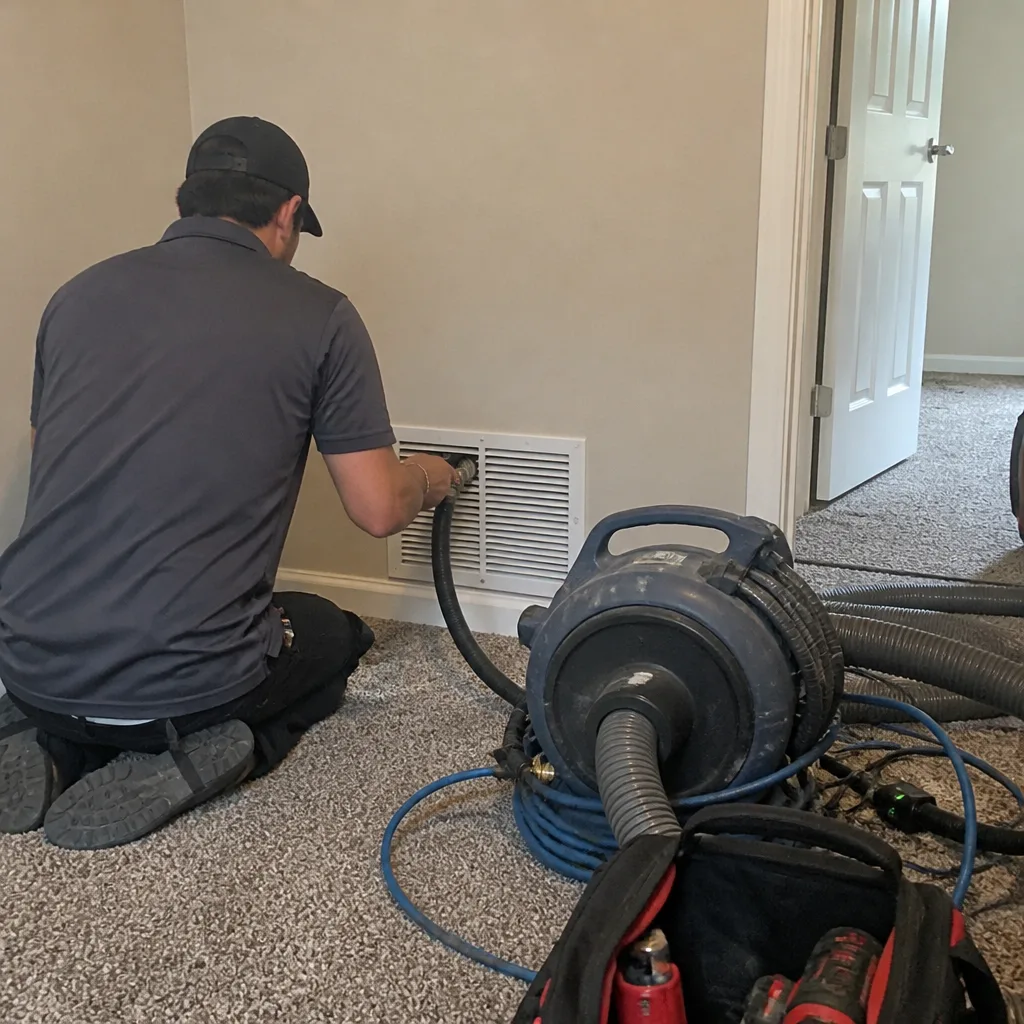
Whole-system duct and dryer vent check with before-and-after photos - you see exactly what came out of your vents
That "$99 whole-house special" is a bait ad - the real number appears once they are in your hallway, or the "clean" is a shop-vac at the register. We photograph the inside of your ducts before and after instead.
Seasonal Air Duct Cleaning Care for North Sacramento: Year-Round Homeowner’s Guide
Spring in the Sacramento Valley doesn’t just bring allergies. It brings cottonwood. If you’ve lived in North Sacramento for more than a year, you know what those white fibers look like piled against curbs and clogging window screens. What most homeowners don’t realize is that those same fibers don’t all stay outside. A surprising percentage of what drifts through an open window on a Delta breeze ends up settling inside return air pathways, where it behaves nothing like ordinary household dust. It clings. It balls up. It wraps around fan blower fins and reduces airflow in ways that standard filters were never designed to handle. This guide maps four distinct seasonal loading events that affect duct systems in North Sacramento specifically, and explains how to time your maintenance around them for better air quality and lower operating costs.
Styles & brands we work with
- Whole-home duct cleaning
- Dryer vent cleaning
- Camera inspection
- Sanitizing & deodorizing
Quick Answer
The most effective seasonal air duct cleaning schedule for North Sacramento aligns with four events: late winter (post-Tule fog moisture assessment), late spring (post-cottonwood and orchard bloom particulate removal), late summer (pre-AC-load flex duct inspection), and mid-to-late fall (post-harvest and wildfire smoke contamination removal). Most homes that run central HVAC year-round benefit from Air Duct Cleaning services in spring and fall, with filter upgrades during heavy particulate windows and visual inspections between cleanings.
Table of Contents
- Late Winter: Post-Tule Fog Moisture Assessment
- Spring: Cottonwood and Orchard Particulate Loading
- Summer: Heat-Related Flex Duct Sagging in Attics
- Fall: Harvest Dust and Wildfire Smoke Contamination
- Deciding Between a Professional Cleaning and a Filter Swap
- Filter Upgrades That Actually Move the Needle
- Step-by-Step Seasonal Self-Inspection for Homeowners
- Common Mistakes to Avoid
- When to Call a Professional
- Frequently Asked Questions
Late Winter: Post-Tule Fog Moisture Assessment
Tule fog is the Sacramento Valley’s most underrated contributor to duct contamination. From November through February, that dense ground fog pushes relative humidity to 95% or higher for days at a stretch. Your ductwork, especially the return side, is pulling that moisture-rich air through every cycle. Duct liners, which are fibrous insulation panels inside metal duct runs, absorb humidity like a sponge. When the fog finally burns off in late February and early March, the moisture that has accumulated inside those liners has had months to interact with the organic material already sitting there: skin cells, pet dander, pollen fragments from the previous fall. That combination is precisely what supports microbial growth.
In North Sacramento, the end of Tule fog season is the right time to assess what happened inside your ducts over the winter. The heating system has been running on and off for four months, and the moment it shuts down for the season is when the air inside the ductwork goes still. Still air plus residual moisture plus organic loading is the formula for musty odors that homeowners often notice in March and April after the first warm week. By then, the problem has had weeks to develop. Catching it in late winter, while the system is still running and the evidence is active, gives you a clearer read on what you’re dealing with.
What to check for in late winter:
- A damp or earthy smell from registers when the fan runs but the heat doesn’t
- Visible condensation on the outside of exposed duct runs in the garage or crawlspace
- An uptick in allergy symptoms or sinus pressure that appears only when the furnace cycles
- Black or gray streaking along the inside of register openings
If you see any of these signs, a professional inspection with camera equipment is the fastest way to determine whether the issue is surface dust or something deeper in the liner material. Surface dust can be cleaned. Liner that has absorbed moisture and begun supporting microbial growth typically requires replacement, which falls under Air Duct Repair in South Natomas and the surrounding North Sacramento corridor. Waiting until the first heat wave to investigate means running air through whatever has been growing in there.
Spring: Cottonwood and Orchard Particulate Loading
North Sacramento sits at the confluence of two spring particulate streams that don’t exist in most of the country. The first is cottonwood. From late April through June, cottonwood trees release billions of seed fibers that look like snow flurries and travel for miles on spring breezes. The second is orchard bloom particulate from the agricultural corridors north and west of the city. Almond orchards, cherry orchards, and the remnants of Sacramento’s citrus belt release fine pollen that mixes with cottonwood fibers in the air column that blows straight into North Sacramento during spring Delta breezes.
Cottonwood is unique among airborne contaminants because of its physical structure. A single cottonwood fiber is coated in a waxy cuticle that makes it hydrophobic and naturally sticky. When these fibers enter your return air stream through open windows, door gaps, and on clothing, they don’t drift through the system the way household dust does. They catch on the first textured surface they encounter: the back side of your return grille, the inner walls of flex duct runs, the leading edges of your blower fan blades. Once caught, they knit together with other fibers and form a mat that reduces effective airflow diameter. A return that had a 16-inch diameter in January might have a 13-inch effective diameter by June in a home that runs window ventilation during cottonwood season.
This is why spring cleaning matters in North Sacramento specifically, and why it’s different from spring cleaning in, say, San Jose or Fresno. Other cities have pollen. We have a sticky, structural particulate that physically binds to airflow surfaces. A vacuum hose with a round brush on the end isn’t going to pull cottonwood mats off a blower fan. It’s the reason professional equipment matters: a Rotobrush system with its rotating agitation head is designed to break up exactly this kind of bound particulate before the Nikro negative air machine extracts it. Consumer-grade tools can’t replicate that mechanical agitation step.
Spring loading checklist for North Sacramento:
- Inspect return air grilles for white fiber accumulation on the back side in early May
- Check the face of your primary air filter weekly during peak cottonwood weeks – if you see white fibers collecting within days of a fresh filter, you’re in the loading zone
- Consider a higher MERV filter during May and June, then return to your standard filter in July (we cover this in the filter section below)
- If you ran your whole-house fan or opened windows regularly through spring, professional cleaning should happen before July 4, not after Labor Day
The cost logic is simple: cleaning a system in late June removes a season’s worth of cottonwood before it bakes onto surfaces in July heat. Wait until fall, and that same cottonwood has spent three months adhered to hot metal in a 140-degree attic. Removal gets harder, and the contaminate has spent more time inside your lungs.
Summer: Heat-Related Flex Duct Sagging in Attics
Summer in North Sacramento is not a heavy loading season for new particulates. It’s a season of heat stress. Attic temperatures in mid-summer routinely exceed 140 degrees during the late afternoon, and that heat does something specific to flexible duct runs that many homeowners never see because the ductwork is hidden above the ceiling.
Flex duct is manufactured with an internal spring steel wire coil that maintains its cylindrical shape. The outer jacket is a vapor barrier. The inner liner is fiberglass insulation. Between the jacket and the liner is the wire helix that gives the duct its structure. Over time, repeated heat cycles soften the polymer jacket material. Gravity does the rest. Runs that were installed in winter months and runs that span long distances unsupported by strapping will begin to sag between support points. A sag isn’t just an airflow restriction, though that’s the immediate effect. A sag also creates a low point where condensation can collect when the AC runs, because cold air passing through a hot attic means the inner surface of the duct can reach dew point. That condensation wets the fiberglass liner, and now you have the same moisture-loading condition that Tule fog creates in winter, only hidden inside a flex run.
Summer inspection sequence:
- On a hot afternoon when the AC has been running for at least an hour, go to the rooms farthest from the air handler and measure airflow at the register. Use your hand – a strong, consistent stream is normal. Weak, warm, or intermittent output from the farthest registers suggests obstruction or sag earlier in the run.
- Check room temperatures across the house during the hottest part of the day. A two-degree or larger split between rooms with similar sun exposure is a classic sign of compromised duct delivery.
- Listen for flapping or popping sounds when the fan first starts. That’s the sound of a collapsed section reopening under pressure.
- If you’re comfortable going into the attic, visually check for sections of flex duct that rest directly on the ceiling joists with visible kinks or flat spots. Use caution around insulation and wiring, and if you have any doubt, don’t get on a ladder in a 140-degree attic.
Here’s the practical guidance: if your summer inspection shows evidence of sagging or collapsed flex runs, that is not a cleaning problem. A cleaning technician can diagnose it and often fix it by adding support straps or replacing the affected section, but the diagnosis needs to happen before the AC runs at full load through July and August. Running a system at full load with a 50% restriction in one supply branch doesn’t just starve that room of cooling – it increases static pressure across the entire system, which shortens blower motor life and drives energy costs up. In our experience working on North Sacramento homes with 1980s and 1990s tract construction, flex duct sag is the most common summer failure that gets mistaken for “the AC just can’t keep up.” Sometimes the AC is fine. The delivery system is bent.
Fall: Harvest Dust and Wildfire Smoke Contamination
October is the highest-contamination month for duct systems in North Sacramento, and it isn’t close. The mechanism is simple convergence. Two major particulate sources peak at the same time.
The first is agricultural harvest. From late September through November, rice fields north and west of Sacramento are harvested. Rice harvest releases silica-based dust that hangs in the air for miles, and it’s heavier than urban dust. It settles in lungs and in ductwork. At the same time, almond orchards shake their trees to drop nuts for collection, which puts a completely different particulate profile into the air column: bark fragments, leaf dust, soil dust, and the residue of any orchard floor activity.
The second is wildfire smoke from the northern Sierra and the coastal ranges. October is peak fire month in California, and Sacramento’s position in the Central Valley means it acts as a collection basin for smoke drainage. Smoke doesn’t just blow through. It settles. The Sacramento Valley’s nighttime temperature inversion traps smoke at ground level, which means your return air intake is pulling smoke-contaminated air through your filter every time the fan runs.
What makes fall loading different from spring loading:
- Smoke particulate is sub-micron. It passes through a standard MERV 8 filter like it isn’t there. What catches in a return duct is the oily residue that smoke particles carry.
- Harvest dust is heavy and abrasive. It’s larger than household dust and settles quickly in the horizontal sections of return runs.
- The combination of oily smoke residue and abrasive harvest dust creates a sticky surface that captures more particulate, accelerating loading for the rest of the heating season.
If you are going to have your ducts cleaned once per year in North Sacramento, make it mid-to-late October or early November, after the first real rain of the season knocks the atmospheric dust down but before the heating season is fully underway. Cleaning in October removes the year’s accumulated loading before you seal your house up for winter and run a furnace that recirculates whatever is in the system for five months.
If you experienced significant wildfire smoke events during the fall, tell your cleaning technician. Smoke residue changes how we approach the job. We use Abatement Technologies containment equipment on jobs where smoke residue is a factor, because the goal is to extract that residue without redistributing it into the home’s living space during the cleaning process. For preparation tips, see our Air Duct Cleaning Emergency Preparedness Guide for North Sacramento Homes.
Deciding Between a Professional Cleaning and a Filter Swap
Not every season warrants a professional cleaning. Most homeowners who run a standard MERV 8 filter and keep their home reasonably clean can manage a two-cleaning-per-year schedule in North Sacramento: one in late spring and one in late fall. But there are conditions that push toward a professional cleaning versus a visual inspection and a filter swap. For Air Duct Cleaning Cost Breakdown: The North Sacramento Homeowner’s Reference for 2026 and more on how we think about the decision, see our detailed guide.
Filter swap is probably sufficient when:
- You’ve replaced filters on schedule every 60 to 90 days throughout the year
- You don’t see dust accumulating on supply register faces between filter changes
- No one in the home has new or worsening respiratory symptoms
- You didn’t experience a wildfire smoke event with visible indoor haze or a lingering smoke smell
- Your home has been renovated in the last five years, so the ducts are newer and cleaner than a typical 30-year-old North Sacramento tract home
Professional cleaning is warranted when:
- Cottonwood fibers are visible on the back side of return grilles in May or June
- You notice a musty odor from registers in March after a foggy winter, or after running AC in late summer
- Smoke smell lingers in the house days after the outside air has cleared
- Visible dust reappears on furniture within 48 hours of cleaning, indicating that the system is redistributing particulate rather than filtering it
- You’ve done a renovation that produced drywall dust, which is fine enough to pass through most filters and settles in duct runs
- Your last professional cleaning was more than three years ago and you have central heating and air
One practical detail that matters more than most people realize: if the ducts have never been cleaned and the home is more than 15 years old, a first professional cleaning is almost always warranted regardless of what you see at the registers. Duct contamination accumulates from the deepest oil content upward. By the time you see it at the register, you’re looking at the top of the pile, not the whole pile.
Filter Upgrades That Actually Move the Needle
The filter conversation in North Sacramento is different from the generic advice you see online because we have two particulate types that behave differently. Cottonwood fibers are large and sticky. Smoke particulate is sub-micron and oily. No single filter handles both optimally, which is why we recommend seasonal filter strategy over buying one filter and leaving it in all year.
Seasonal filter strategy for North Sacramento:
- April through June (cottonwood and orchard bloom): Run a MERV 11 or MERV 13 pleated filter. The added surface area catches more of the larger fibers, which matters because cottonwood can load a MERV 8 filter to full restriction in 10 to 14 days. A higher-MERV pleated filter has more total media area and lasts proportionally longer under heavy loading.
- July through September (low loading, high filtration demand from AC recirculation): You can drop back to a MERV 8 during the hottest months if static pressure is a concern. The air is cleaner during this window, and the lower pressure drop of a MERV 8 helps the AC run efficiently when it’s working hardest.
- October through November (harvest dust and smoke): Upgrade back to MERV 13 if you have wildfire smoke in the area. If smoke is present, change the filter once the smoke clears – it has been doing hard work.
- December through March (Tule fog season): Any MERV rating works, but change on schedule. The moisture in the air reduces filter loading efficiency, and a filter that has absorbed humidity and then dried can develop resistance that increases fan energy use.
For homeowners who want to go deeper, whole-home filtration integration is the long-term answer. We work with Aprilaire media filters and Honeywell whole-home filtration systems because those units are designed to run continuously with low pressure drop, and they can be specified to match the specific particulate profile of a North Sacramento home. A standard 1-inch filter slot limits what you can achieve. A 4-inch media cabinet opens up MERV 13 or higher without choking the system. If you’re serious about indoor air quality and you’re in a home with a standard 1-inch filter slot, that upgrade is the single highest-value change you can make. It isn’t cheap, but neither is running a MERV 13 filter in a 1-inch slot and straining your blower motor every cycle.
We also recommend a Guardsman filter assembly in homes where the filter slot is awkward to access or where air bypass around the filter is evident – a common issue in older North Sacramento homes with slightly warped filter housings. Bypass means air flows around the filter, not through it, and no filter upgrade matters if 20% of the return air skips the media entirely.
Step-by-Step Seasonal Self-Inspection for Homeowners
You don’t need to be a contractor to notice most of what matters. Here’s a four-season self-inspection routine that takes about 10 minutes per season and gives you data to decide when to call a professional.
Step 1: The white glove test (do this in every season)
- Turn the system fan to “on” (not auto) at the thermostat.
- Wait 60 seconds for the blower to reach full speed.
- Hold a clean white tissue or paper towel an inch from a supply register that is at least 15 feet from the air handler.
- Watch for visible dust particles moving across the tissue. Anything you can see means the system is distributing particulate.
Step 2: The register examination (every season, 2 minutes)
- Remove one supply register in the main bedroom and one return register in the hallway.
- Shine a flashlight inside the duct opening.
- Look for gray or brown accumulation on the inner walls. A thin dust film is normal. Thick, fuzzy, or caked accumulation is not.
- Look specifically for white fibers in spring and dark, greasy residue in fall.
- Replace the register securely when done.
Step 3: The smell test (late winter and late summer)
- Run the fan without heat or AC.
- Stand near a supply register and take a slow breath through your nose.
- Smell for anything musty, damp, or burnt. Clean ducts should smell like nothing. If you can smell the house’s last meal, the system is recirculating odor compounds that have adsorbed onto duct surfaces.
Step 4: The static pressure feel test (peak summer)
- On the hottest afternoon of the week, with the AC running, stand in front of the register in the room farthest from the air handler.
- Hold your hand 6 inches from the register grille.
- You should feel a strong, steady push of air. If it barely moves the hair on your arm, something is restricting the run.
- Repeat in the room closest to the air handler and compare. The difference is your diagnostic.
If any of these four checks gives you a positive result, call for a professional evaluation. If all four come back clean, you can defer professional cleaning to the next scheduled window.
Common Mistakes to Avoid
- Cleaning only when you notice a problem. By the time the problem is visible at the register or smellable in the living room, the contamination has reached a level that affects air quality. Scheduled cleaning prevents that threshold from being reached in the first place. In North Sacramento specifically, the fall harvest window is a predictable loading event, not a surprise.
- Running AC with a COTTONWOOD-clogged filter for “a few more weeks.” A loaded filter increases static pressure across the blower, which increases energy use and can lead to blower motor failure. A $15 filter is cheaper than a $600 motor replacement.
- Closing registers in unused rooms to “save energy.” This increases static pressure in the remaining open runs and can actually increase total system pressure, making the blower work harder. If you want zoned airflow, install zone dampers. Don’t close registers.
- Ignoring the return side of the system. Most homeowners look only at supply registers because that’s where the air comes out. But the return side is where the contamination enters. Clean return runs matter as much or more than clean supply runs.
- Using a consumer-grade flex-hose vacuum to “clean” ducts without negative air containment. Open-vacuum cleaning methods frequently pull particulate into the home rather than out of it. Professional cleaning is extraction, not agitation.
- Assuming that a newly built home doesn’t need duct inspection. Construction debris in ducts is common in new construction throughout the Sacramento region. Drywall dust, sawdust, and construction debris are often present in duct systems before you move in, and no number of years of running the fan removes what’s settled in the runs.
- Waiting until the first 100-degree day to test the AC. You want to know about a sagging flex run or a weak blower before the system has to work at full load in North Sacramento heat. Test in spring, not in July.
When to Call a Professional
Call a professional when you see white fibers accumulated on return grilles in spring, when you smell something musty from registers after a foggy winter, when rooms are unevenly cooled in summer, or when smoke smell lingers after a wildfire event. Call if your home has never had the ducts cleaned and it’s more than 15 years old. Call if you see dust reappear on furniture within days of cleaning, because that means the system is distributing particulate, not collecting it. These are not conditions that resolve themselves with a better filter. If you’re in North Sacramento or the surrounding area, the Stonebridge Air Duct Cleaning home team can assess your system and give you a straight answer on what needs cleaning and what needs repair. Call (833) 467-4303 for a free estimate.
Frequently Asked Questions
Most North Sacramento homes with central heating and air that run their systems year-round benefit from professional duct cleaning twice per year: once in late spring after cottonwood season, and once in late fall after harvest and wildfire smoke season. Homes with no pets, no smokers, no wildfire smoke exposure, and diligent filter replacement can often extend that to once annually in the fall.
The price difference typically reflects equipment and methodology. Consumer-grade vacuums and brush attachments can’t achieve the contact agitation or negative air extraction that a professional system provides. Stonebridge uses Rotobrush rotational agitation equipment and Nikro negative air machines – the same commercial-grade tools specified by HVAC contractors – because the difference in extraction results is measurable. A low-cost cleaning that leaves half the particulate behind is more expensive per unit of actual cleaning than a professional job done once.
Ask for before-and-after photos of the inside of your ductwork. A legitimate duct cleaning company will provide photos showing the return side, supply runs, and the blower compartment before and after the job. If a company won’t provide photographic proof, that’s a signal. Your own ducts are the evidence – the metal should look clean, not dusty, after a professional job. Call (833) 467-4303 for a free estimate and ask about our documentation process.
It can, but the effect depends on the specific allergen. Duct cleaning removes accumulated particulate from the delivery system, which reduces the amount of allergen being redistributed through the home every time the fan runs. For Sacramento-specific allergens like cottonwood, orchard pollen, and wildfire smoke residue, cleaning at the right seasonal window removes the trigger from the system. For dust mite allergens, which come from the bedding and soft furnishings in the living space rather than the ducts, cleaning provides less direct benefit.
A shop vac doesn’t have the reach, the airflow, the negative air capture, or the agitation to clean duct interiors. A shop vac can remove visible dust from the first few inches of a duct run. Everything beyond that stays in place. The professional methodology is different: a negative air machine creates continuous airflow out of the home while a powered agitation head mechanically breaks the bond between particulate and duct surface. Without the negative air, you’re just moving dust around inside the system.
In the general marketplace, there are operators who use bait pricing and upsell tactics, which is a real problem in this industry. That’s exactly why we publish honest guidance on our more guides & resources page and we recommend that homeowners understand what they’re paying for. A legitimate duct cleaning is not a scam, but a low-intent contractor selling a $49 whole-house clean is almost certainly running a bait-and-switch. For North Sacramento homeowners, the right approach is to ask for the equipment being used, ask for before-and-after photos, and confirm the system uses negative air extraction. If the answer to all three is unsatisfying, you’re not talking to a real duct specialist. Call (833) 467-4303 for a free estimate and we’ll show you exactly what the job involves.
A professional whole-house duct cleaning in a typical 1,500 to 2,500-square-foot North Sacramento home takes between 3 and 5 hours. Systems that include air duct repair work, additional return runs, or significant flex duct replacement will take longer. The company should be able to tell you the expected timeframe before the job starts, and the work should be scheduled as a full appointment, not a 45-minute stopover.
The Bottom Line
North Sacramento’s duct systems face four distinct loading events each year: Tule fog moisture in late winter, cottonwood and orchard particulate in spring, heat-related flex duct damage in summer, and harvest dust plus wildfire smoke in fall. Aligning professional cleaning with those events protects air quality more effectively than cleaning once a year on a random date or waiting until a problem forces the issue. If you remember one thing from this guide, make it this: clean after cottonwood season in June, and clean after wildfire and harvest season in October or November. Those are the two windows that matter most in this city.
Written by the team at Stonebridge Air Duct Cleaning, serving North Sacramento since 2014.
See the difference
 Before
 After
 Before
 After
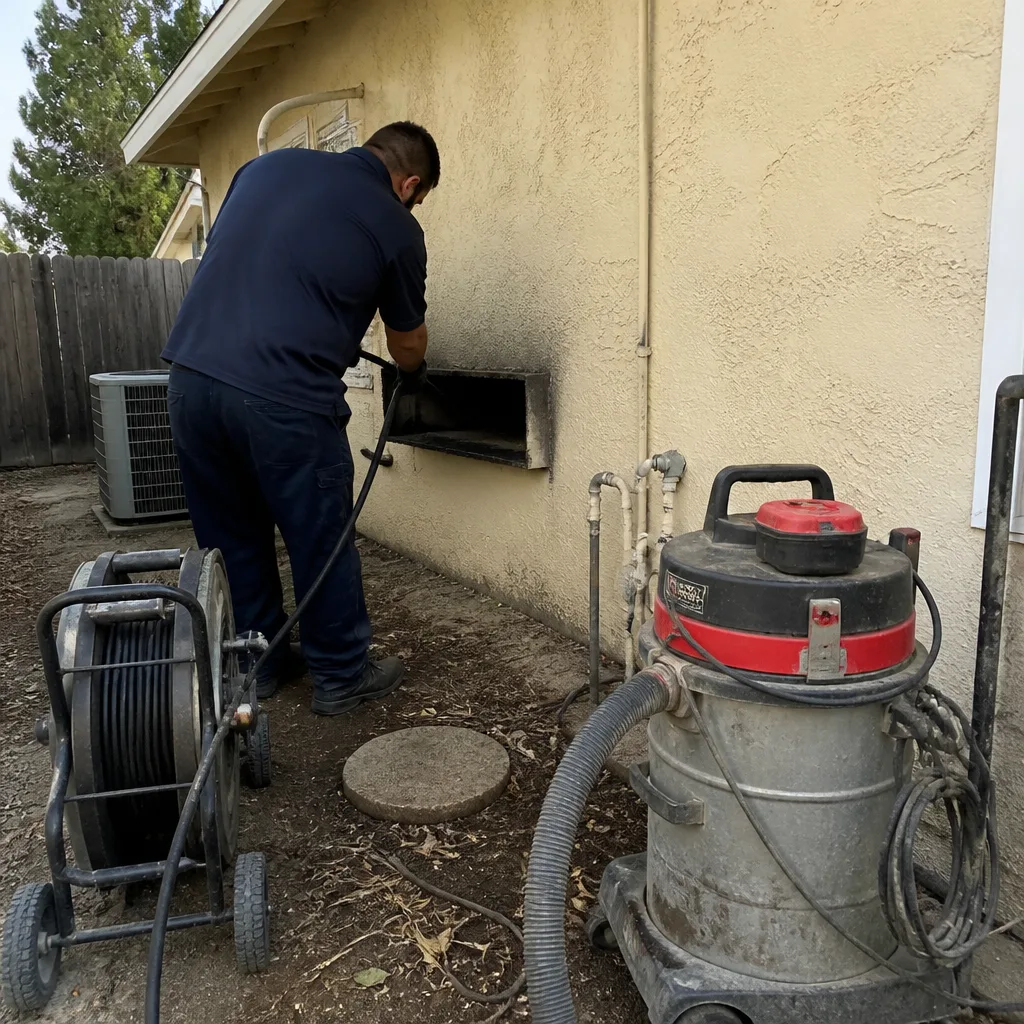 Before
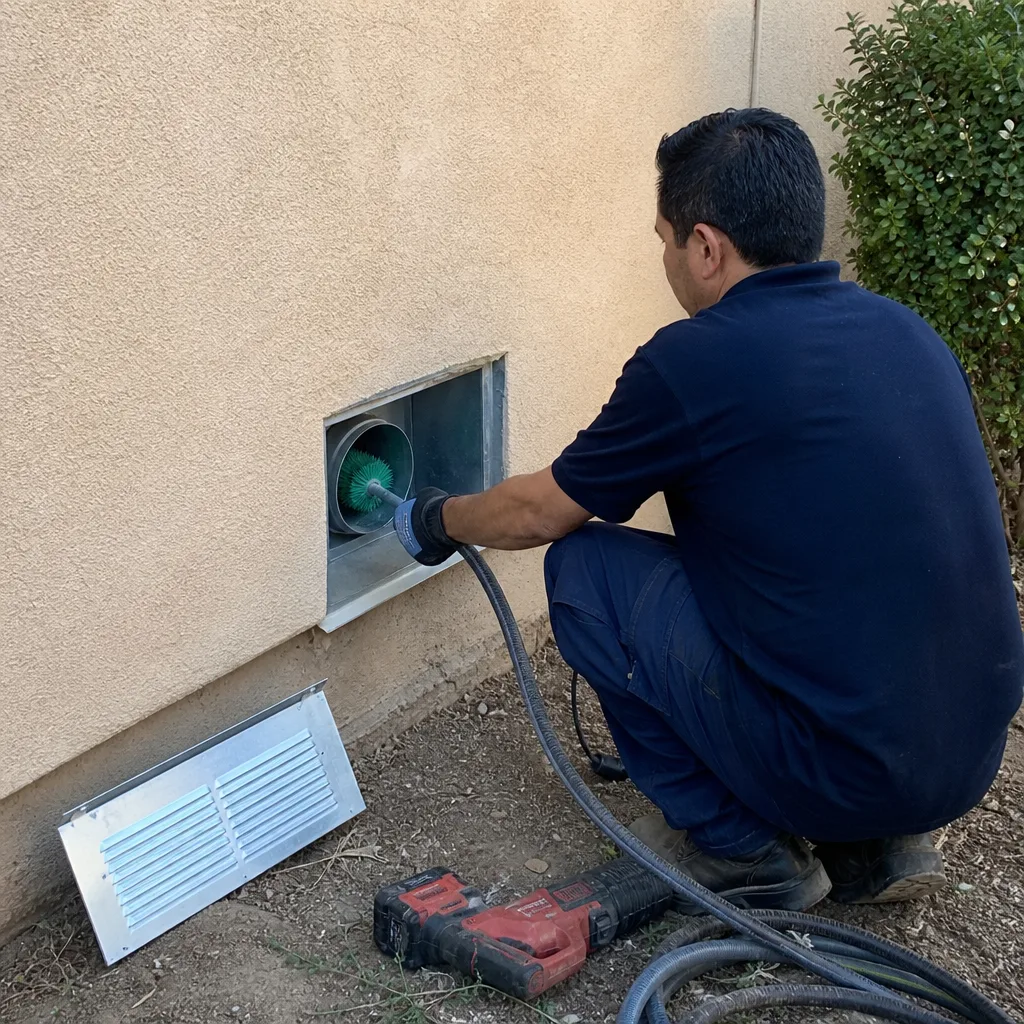 After