
Last updated November 2, 2026
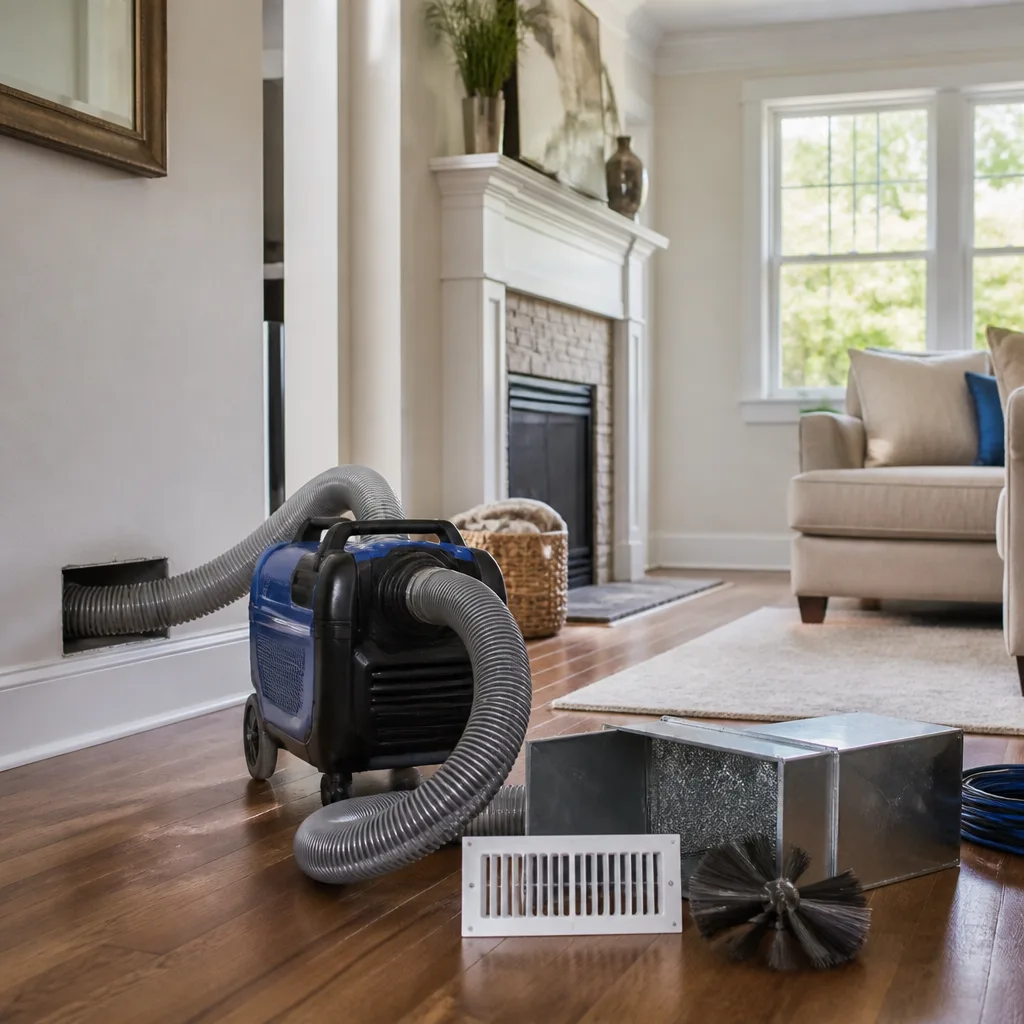 Whole-home duct cleaning
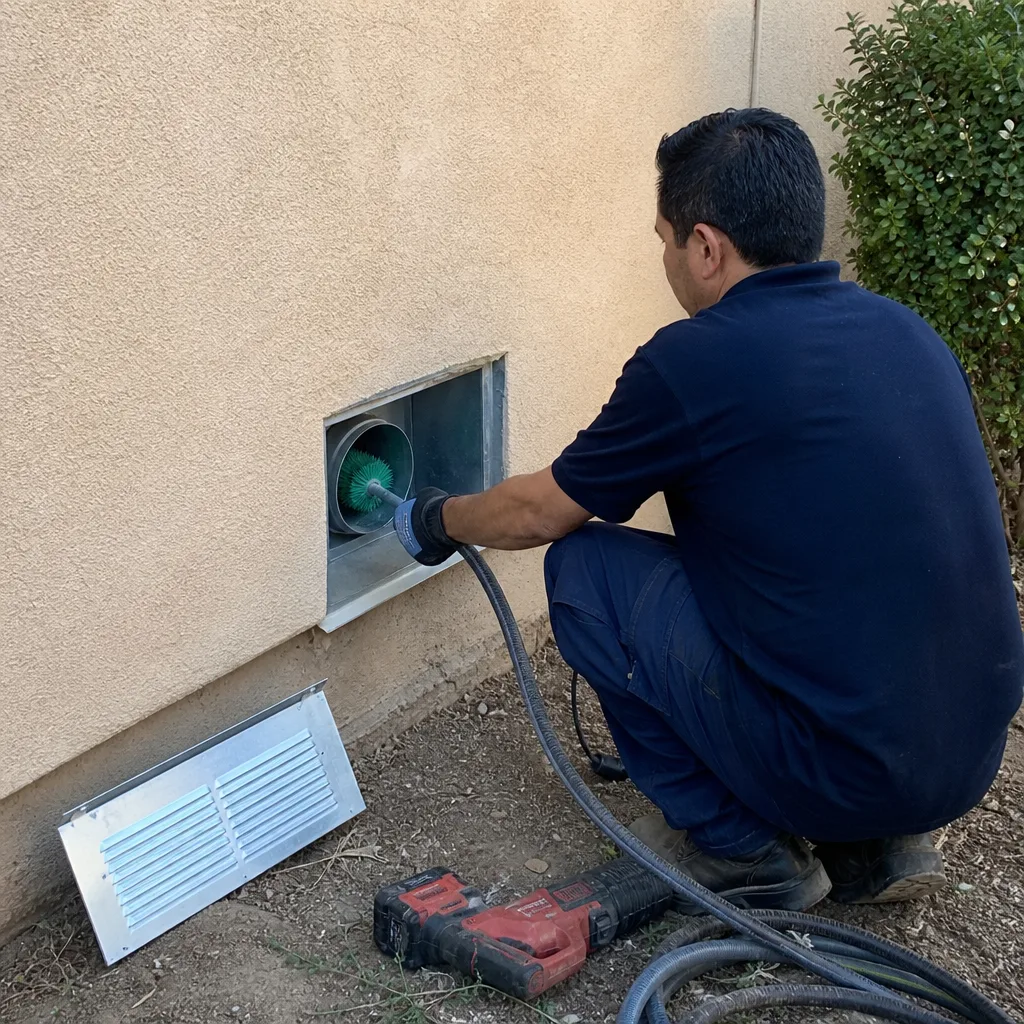
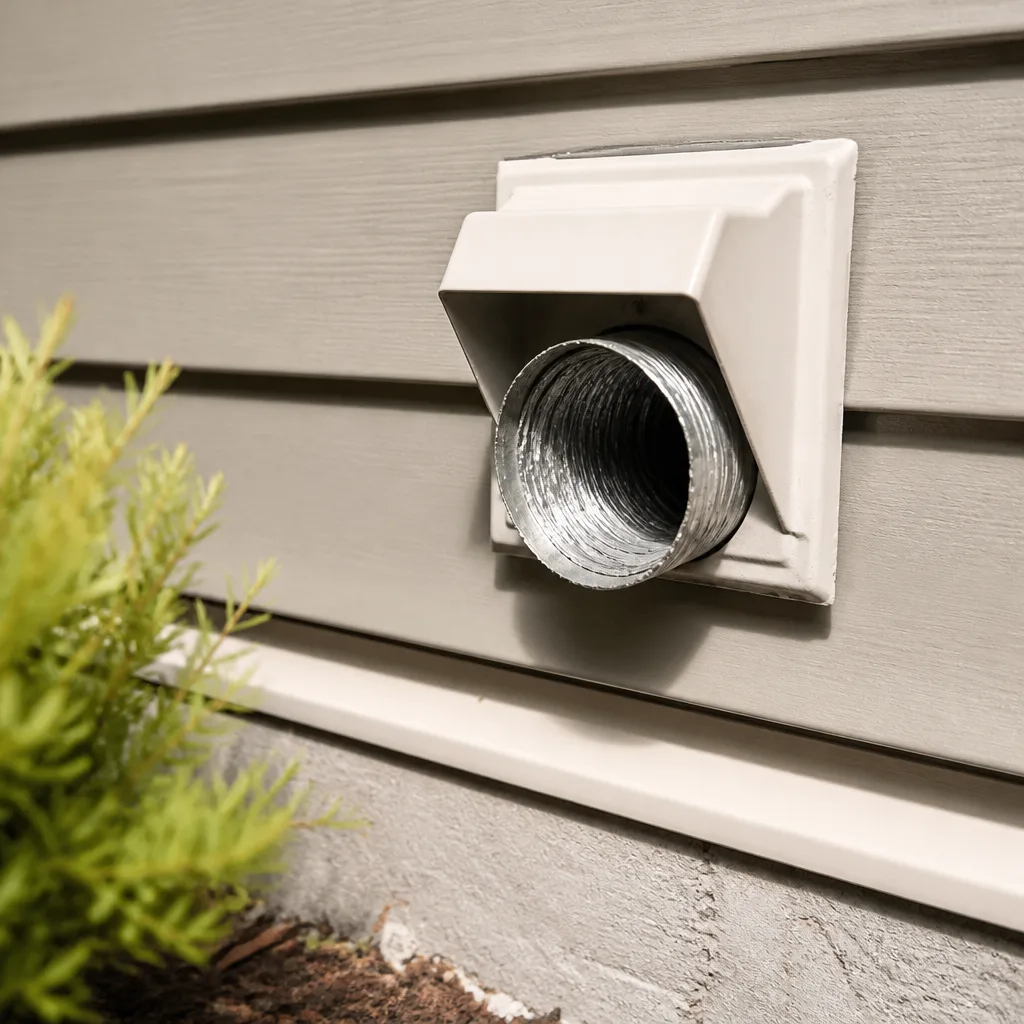 Dryer vent cleaning
 Camera inspection
 Sanitizing & deodorizing
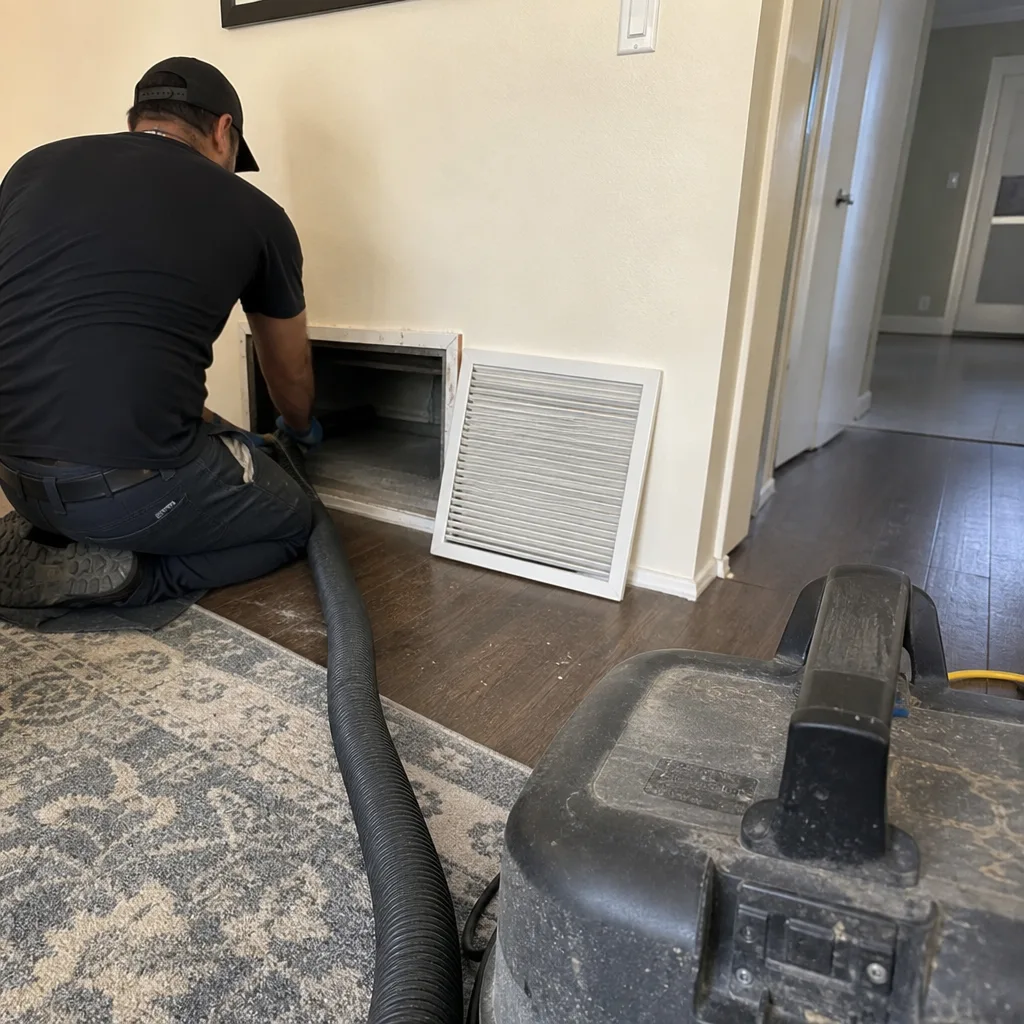
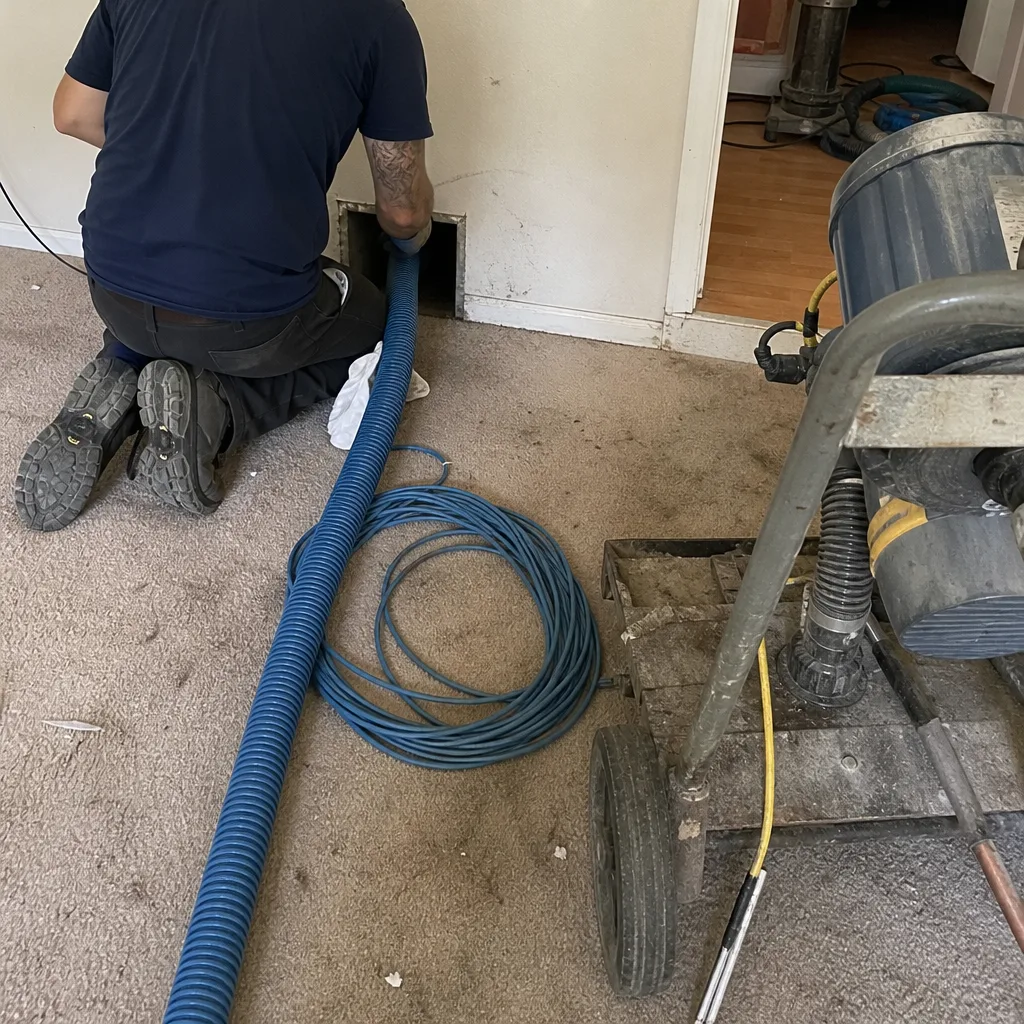
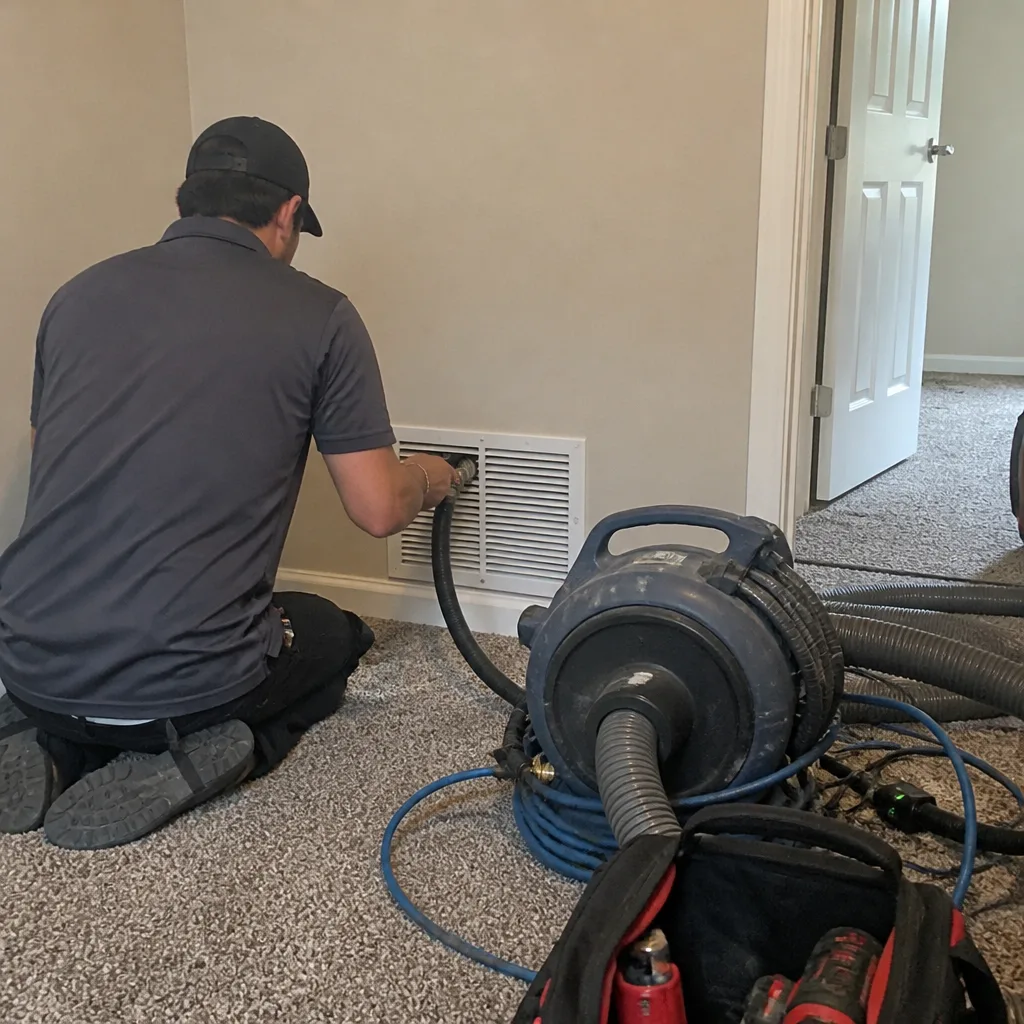
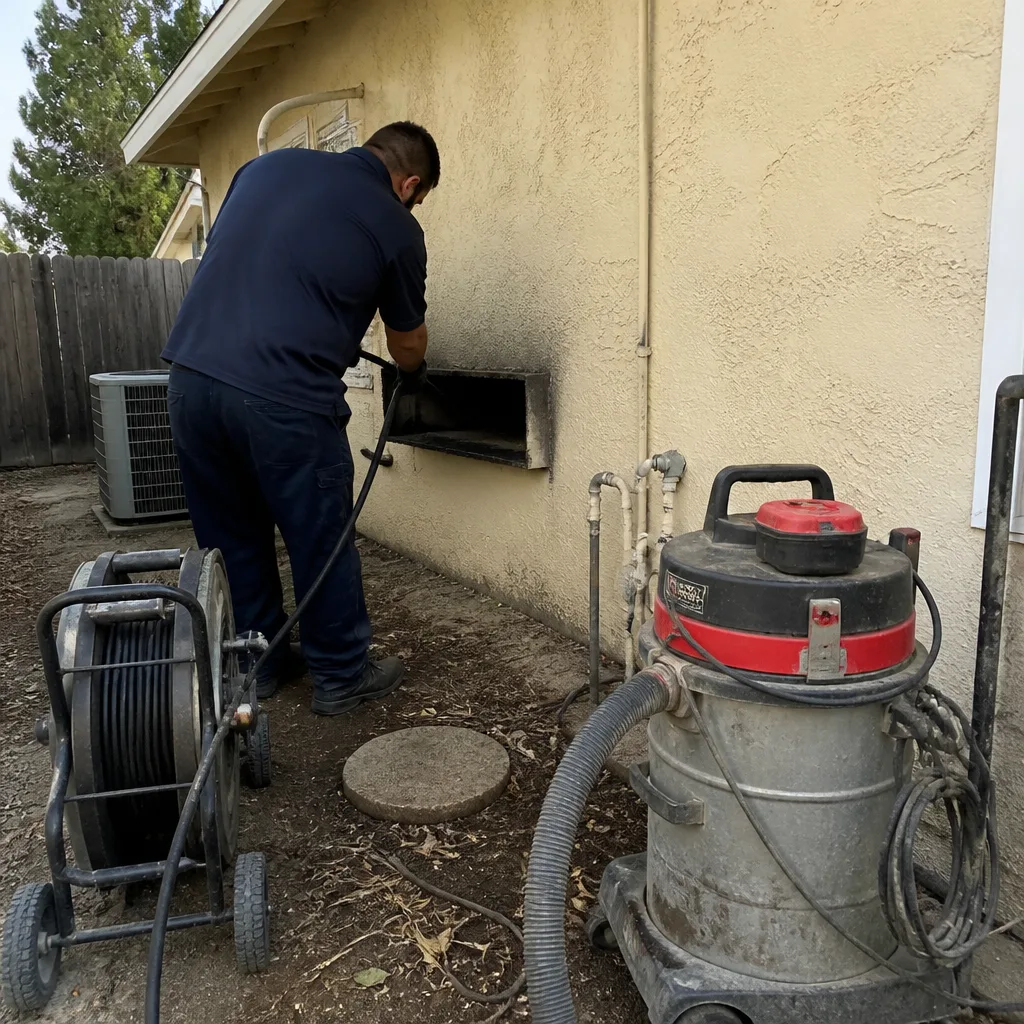
Whole-system duct and dryer vent check with before-and-after photos - you see exactly what came out of your vents
That "$99 whole-house special" is a bait ad - the real number appears once they are in your hallway, or the "clean" is a shop-vac at the register. We photograph the inside of your ducts before and after instead.
Air Duct Cleaning Maintenance Checklist for North Sacramento Homeowners
The most common duct problem we find during professional cleanings in Sacramento-area homes isn’t dirt. It’s disconnected flex duct sections that have been silently reducing airflow for years without triggering a single obvious symptom. A joint separates in an attic, conditioned air spills into insulation instead of a bedroom, and the homeowner notices nothing except a slightly higher bill and a room that never quite cools down. This checklist exists because the real value of duct maintenance isn’t remembering to swap a filter. It’s building a diagnostic rhythm that catches degradation before it becomes a repair bill. North Sacramento homeowners face a specific set of conditions: valley heat loads, winter inversions, attic temperatures that punish cheap materials, and a housing stock where retrofit ductwork was often installed decades ago under far looser standards. What follows is the maintenance routine we’d recommend if we couldn’t sell you anything and just wanted your system to work.
Styles & brands we work with
- Whole-home duct cleaning
- Dryer vent cleaning
- Camera inspection
- Sanitizing & deodorizing
Quick Answer
A practical air duct maintenance checklist for North Sacramento homeowners includes: a monthly room-by-room airflow consistency check, quarterly visual inspection of accessible duct connections, filter changes timed to our actual dusty season (not the generic 90-day rule), a post-service log of every HVAC visit, and energy bill monitoring for the three leakage signatures listed below. These five habits catch most duct failures early enough to prevent them from becoming repair jobs, and they tell you exactly when it’s time for a professional cleaning from Stonebridge Air Duct Cleaning home.
Table of Contents
- The Tissue-and-Timer Room-by-Room Airflow Check
- How to Inspect Visible Duct Connections Without Professional Tools
- Filter Change Intervals Calibrated to North Sacramento’s Real Seasons
- What to Log After Every HVAC Service Call
- Three Energy Bill Signs That Point to Duct Leakage, Not Equipment Problems
- What Actually Happens to Ducts Between Professional Cleanings
- A Seasonal Maintenance Calendar for the Sacramento Valley
- Common Mistakes to Avoid
- When to Call a Professional
- Frequently Asked Questions
- The Bottom Line
The Tissue-and-Timer Room-by-Room Airflow Check
This is the single most useful diagnostic habit a homeowner can build, and it costs nothing but five minutes a month. Duct systems in North Sacramento homes are almost always imbalanced. One bedroom gets a full blast while the nursery barely moves air, and the difference is usually structural: a crimped flex run, a separated joint, or a damper that’s been closed since the last remodel. The check works like this:
- Set your thermostat fan to ON, not AUTO, so the blower runs continuously. Close all exterior doors and windows.
- Take a single-ply tissue (single-ply moves more easily than double, making the test more sensitive) and hold it against each supply register. Count seconds for it to be pushed away from vertical. Anything under three seconds is low flow; three to six seconds is normal; over six seconds means the room is getting strong flow.
- Repeat the test in every room. Write down the times.
- Compare rooms of similar size and distance from the air handler. A 20 percent difference is normal. A 50 percent difference means something upstream is wrong.
In our experience with North Sacramento ranch houses and split-levels built between the 1960s and 1990s, the low-flow room is almost never a fan problem. It’s usually a crushed flex duct where an attic rat or a careless cable installer compressed the inner liner, or a boot connection that pulled loose from the floor register. Both are fixable during a single Air Duct Repair in South Natomas visit, but only if you know which room to point at when the technician arrives. The tissue test isolates the problem room and gives the technician a target instead of a general complaint about weak airflow.
Run this check monthly during cooling season (May through October in Sacramento) and once during winter. Seasonal shifts in air density make a small difference, so this is a relative test, not an absolute measure. What you’re watching for is change over time: a room that tests at four seconds in June and seven seconds in August hasn’t changed its duct geometry. Something has shifted, separated, or been chewed through.
How to Inspect Visible Duct Connections Without Professional Tools
Most North Sacramento homeowners never see their ducts. The system lives in the attic or the crawlspace, and out of sight means out of mind until a problem forces its way into consciousness through a high bill or a dead room. But a five-minute visual inspection, done safely and quarterly, catches the majority of structural failures before they compound. You don’t need a camera, a fancy borescope, or any tool beyond a flashlight. What you’re looking for:
- Separated joints. Look at every place a flex duct connects to a rigid boot, a plenum, or another section of flex. The gray or black inner liner should disappear into a metal collar held by a zip tie or band clamp. If you see bare wire coil, a gap of any size, or the liner folded back like a sock inside-out, that joint has failed. Conditioned air is spilling into the unconditioned attic, and the room it serves is running on whatever air pressure remains.
- Crimped or compressed flex runs. Flex duct should have a gentle, unsupported sag between support straps. If you see a section bent at a sharp angle, pinched under a box of holiday decorations, or squeezed by a structural member, the inner diameter is reduced. A single 90-degree kink can cut airflow to a room by 40 percent or more. In Sacramento attics where temperatures hit 130 degrees in summer, kinked flex duct also ages faster at the stress point, because the inner liner is stretched and the plastic becomes brittle more quickly.
- Disconnected boots. At each floor register, look down through the grille with a flashlight. The metal boot should meet the underside of the floor tightly. If you see a dark gap between boot and subfloor, or if the boot has pulled away from the register frame, you’re blowing conditioned air into the ceiling cavity or the crawlspace. This is common in older North Sacramento homes where the original grilles were replaced during a remodel and the new frames didn’t align with the old boots.
- Sweating or moisture staining. Anywhere you see condensation on metal duct surfaces in summer, or water stains on insulation in winter, you have a temperature differential problem that invites mold growth. This isn’t a cleaning-only fix; the underlying airflow or humidity issue needs diagnosis. Stonebridge uses Rotobrush and Nikro systems for cleaning, but a moisture problem requires identifying the cause.
Stay on the walkable sections of ceiling joists if you go into the attic, and wear a mask if insulation is exposed. If you’re not comfortable with any part of this inspection, note it and mention it when you schedule a professional cleaning. We routinely inspect duct connections as part of a full-system assessment.
Filter Change Intervals Calibrated to North Sacramento’s Real Seasons
The generic advice printed on a filter box, change every 90 days, is wrong for Sacramento. Our air quality problems are seasonal and specific. We have a summer dust cycle driven by the Central Valley’s agricultural dust, a fall smoke season that arrives with wildfire events in the Coast Range and Sierra foothills, and a winter inversion layer that traps particulate matter in the valley basin. A filter that’s still white after 90 days in June might be black by day 40 in late August when the Delta breeze carries fine particulate from dry farmland. Here’s what actually works for North Sacramento homes:
- June through September (cooling season): Check the filter every three weeks. In many Sacramento-area homes, a MERV 8 filter loads visibly within 30 to 40 days during peak dust months. If you can see a gray film when you hold the filter up to light, replace it regardless of calendar time.
- October and November (smoke season): If wildfire smoke is present, a MERV 8 filter is doing almost nothing for you. Upgrade to MERV 13 for the smoke window, and plan to replace it more often because the smoke loading is extreme. Stonebridge works with Honeywell filtration systems that handle this far better than a standard one-inch filter frame.
- December through February (inversion season): Sacramento’s winter inversions trap wood smoke, vehicle exhaust, and fine particulate at ground level. This is when your filter earns its keep. Check it monthly. If you heat with a gas furnace, the filter is also the only thing protecting your blower motor from the dust the system recirculates.
- March through May (shoulder season): This is the calmest air quality window of the year. A 60 to 90 day check interval is reasonable, but use the visual test rather than pure calendar time. Sacramento pollen from oak and grass peaks in April and May, and if anyone in the house reacts to it, a filter that captures pollen makes a real difference.
The filter’s actual job is protecting the equipment, not cleaning your indoor air. For actual air cleaning, you need either a high-MERV filter (which stresses the blower if the system wasn’t designed for it) or a dedicated filtration system like those Stonebridge integrates through Aprilaire whole-home units. The filter in the return grille catches big dust. The air you breathe moves through the duct system, and whatever isn’t captured at the return cycles through every room.
What to Log After Every HVAC Service Call
The most underrated maintenance habit in homeownership is a simple service log. When a technician visits, whether it’s a seasonal AC tune-up, a new capacitor, or a refrigerant top-off, there are specific data points you should record. Every HVAC service call produces information that tells you about your duct system, whether or not the technician was looking at ducts. Here’s the minimum useful log entry:
- Date and company. Seems obvious, but most homeowners can’t tell you which company touched the system three years ago.
- What was found and what was done. In the technician’s words if possible. “Cap was reading 4.2 uF, replaced with 5 uF” is useful. “AC fixed” is not.
- Filter condition at time of service. If a service tech shows you a clogged filter at a visit in August and you last changed it in June, that tells you your filter interval is too long for your particular house.
- Static pressure reading, if taken. Not every tech measures static pressure, but if yours does, write it down. Rising static pressure over successive visits indicates that something is restricting airflow, and the most common cause in older Sacramento duct systems is duct degradation, not a dirty coil.
- Any comment the tech makes about airflow. If a technician mentions that a particular room seems weak, or that the return feels undersized, log it. That’s diagnostic gold, and it’s exactly the kind of detail that tells a duct specialist where to look during a cleaning or repair visit.
After two or three years of consistent logging, you have a service history that lets a specialist spot trends. A blower motor that fails every four years may be overheating due to high static pressure from badly designed ductwork, not a cheap motor. A capacitor that repeatedly fails in August may be heat-related, but the heat source could be an attic install with no ventilation. These are the kinds of patterns that become visible only when the data is written down.
If you’re scheduling a duct cleaning, this log is useful context. It tells us whether your system has a history of airflow complaints or whether the cleaning is preventative. Stonebridge technicians read the clues before they start the equipment, because knowing whether a system has been struggling changes where we look for structural problems alongside the cleaning.
Three Energy Bill Signs That Point to Duct Leakage, Not Equipment Problems
Duct leakage in North Sacramento homes is enormously common, and it hides on the energy bill as something else. The Department of Energy has estimated that typical duct systems lose 20 to 30 percent of conditioned air to leaks, and Sacramento’s hot attics make the losses worse because the air that leaks is expensive air. When we quote the research, homeowners often say their equipment has been checked and is running fine. The equipment is fine. The ducts aren’t. Here are three patterns that suggest you’re paying to condition your attic:
- Your summer bill has been rising for three or more consecutive years, even when the rate per kilowatt-hour is factored out. Equipment doesn’t get progressively less efficient over a few years unless something is degrading. A slow decline in efficiency with no change in usage usually means duct loss is increasing: another joint separating, another run crimping, another boot pulling loose. The AC is generating the cooling. The ducts are losing it.
- Your house cools unevenly even though the rooms that ARE cool are genuinely comfortable. A properly balanced duct system delivers consistent temperature in every room. When one room is cold and another is ten degrees warmer, the system isn’t underpowered. It’s losing air before it reaches the warm room. Adding a bigger AC unit doesn’t fix a duct leak. It just pushes more air into the leak.
- Your bill is normal, but the system runs much longer than it used to for the same setpoint. This is the subtle one. If the thermostat is set to 78 degrees and the system used to satisfy it in 15 minutes but now runs for 30, the equipment might still be working at full capacity. But half the output is going into the attic or crawlspace. You’re paying for the same cooling you always got, plus a significant surcharge of air you’ll never feel.
None of these three patterns by themselves proves duct leakage. But all three together, especially in a home built before the 1990s with original flex ductwork, make duct deterioration the most likely culprit. A professional duct assessment is a small investment compared to continuing to pay for conditioned air that never reaches a room. The same visit that cleans the ducts can identify and repair the leaks, which is the efficiency advantage of working with a company that offers Air Duct Cleaning in South Natomas and repair as a combined service.
What Actually Happens to Ducts Between Professional Cleanings
Ducts accumulate material at a predictable rate, and the composition of that material varies by season and by household. Understanding what’s actually in your ducts between cleanings helps calibrate both your expectations and your maintenance interval. In North Sacramento homes, here’s what we see accumulating in the months and years between professional visits:
- Fine particulate dust. Central Valley dust is exceptionally fine, in the 2.5 to 10 micron range, and it behaves differently from the lint and hair that dominates in more humid climates. Sacramento dust stays suspended longer, travels deeper into the system, and compacts on the inner walls of duct runs rather than sitting loosely in the bottom. This is why a “quick vacuum of the registers” doesn’t meaningfully clean Sacramento ductwork; the material is adhered to the liner surface.
- Pet dander and hair. Homes with dogs or cats load their duct systems much faster, and the material clings to the oily residue left by cooking and candle use. Dander is a common trigger for allergy symptoms that flare in winter when windows are closed and the furnace circulates accumulated dander through every room.
- Skin flakes and textile fibers. These are the unglamorous but universal components of household dust. They compose the bulk of what accumulates in the return air plenum and the filter grille.
- Construction debris, in remodeled homes. North Sacramento’s older housing stock means many homes have been through at least one major remodel. Drywall dust, sawdust, and small debris get pulled into the return side during construction and remain in the ducts for years. This is also a common trigger for a first-time professional cleaning: the homeowners renovate, and suddenly every surface in the house is coated with fine white dust that keeps reappearing no matter how often they wipe.
The distinction that matters for maintenance is between movement and adhesion. Loose debris can be pulled through returns and redistributed. Adhered material stays put until mechanically agitated. A professional cleaning with a Rotobrush or Nikro system does the mechanical work, but between cleanings, the realistic goal is to slow the accumulation rate: change filters deliberately, consider a whole-home filtration upgrade through Honeywell or Aprilaire, and keep HVAC system components clean.
For homes with existing air quality concerns, Stonebridge’s Abatement Technologies equipment provides air containment during cleaning, meaning that the material being removed from your ducts doesn’t get redistributed into the living space during the process. This is a meaningful distinction for allergy-sensitive households, and it’s the kind of equipment most generalist cleaning companies don’t invest in.
A Seasonal Maintenance Calendar for the Sacramento Valley
Sacramento’s climate doesn’t map neatly to the national maintenance advice written for four-season climates. Our seasons are: a long, hot cooling season; a brief but intense smoke season; a cool, wet inversion season; and a compressed spring allergy season. Your maintenance calendar should look like this:
April: Pre-Cooling Season Assessment
Run the tissue airflow check in every room. Change the filter, even if it looks clean. Inspect visible duct connections in the attic. If you noticed any rooms underperforming last summer, mark them for attention now, before the cooling load begins. This is the best month for a professional cleaning; the dust from winter inversion has settled, and you’ll start the heavy-use season with clean ducts.
June through August: Peak Cooling Monitoring
Check the filter every three weeks. Run the tissue test monthly. Watch for any new airflow complaint or rising energy use. If the AC runs continuously on the hottest days, that’s expected in Sacramento; if it can’t hold setpoint on a 95-degree day, the problem is more likely ducts or charge than weather.
September: Post-Summer Filter and System Check
The dirtiest month for Sacramento filters is often August, when fine dust from the Valley floor reaches peak concentration. Check and likely replace the filter. Visually inspect the outdoor condenser for dust accumulation on the coil fins; if it looks matted, that’s reducing efficiency.
October through November: Smoke Season Preparedness
If wildfire smoke is present, consider a temporary MERV 13 filter if your system can handle the static pressure drop, or invest in a dedicated filtration system. Keep windows closed during smoke events. This is also the window for a fall duct cleaning if you skipped spring; the post-smoke period leaves ducts loaded with smoke particulate that will recirculate all winter.
December through February: Inversion Season Monitoring
Check the filter monthly. Watch for symptoms that worsen when the heat runs: dry cough, stuffiness, dust accumulation on horizontal surfaces near registers. These suggest the system is recirculating accumulated material. If you’re considering a winter cleaning, schedule before the holidays if possible, since indoor air quality matters most when the house is sealed for winter.
March: The Quiet Month
The best month for repair work and structural fixes. Dryer Vent Cleaning in South Natomas is calm-season work, and any duct repair that requires attic access is much safer before the attic becomes a 130-degree oven. If you noticed any underperforming rooms over winter, this is the time to have a professional assess the system.
Common Mistakes to Avoid
- Changing filters on a strict 90-day calendar without looking at them. Sacramento’s dust loading varies enormously by season and by neighborhood, with areas near open agricultural land or construction loading much faster than neighborhoods nearer the rivers. The calendar is only a fallback; the visual check is the primary signal.
- Closing too many registers in unused rooms. It seems like an energy-saving move, but central systems are designed for a specific air volume. Closing more than one or two registers increases static pressure, which stresses the blower and can accelerate duct leakage at weak joints. In older North Sacramento duct systems, closed registers often push duct connections apart.
- Using high-MERV filters in a system that wasn’t designed for them. A MERV 16 filter in a one-inch filter frame restricts airflow enough to cause real damage over time. If you want high-efficiency filtration, use a dedicated filtration unit designed for the static pressure, not a box-store filter.
- Ignoring visible duct problems because the system “still seems to work.” A separated flex duct in an attic still cools the house somewhat, because the air handler pressurizes the system and some air still reaches the register. The system limps along while the energy bill quietly climbs and the attic gets air-conditioned.
- Treating duct cleaning as a one-time event. Many homeowners think ducts need to be cleaned once in the life of the house. In Sacramento, with our dust loads and long cooling seasons, a cleaning every three to five years is more realistic for most occupied homes, and more often in homes with pets, recent renovations, or allergy-sensitive occupants.
- Letting a generalist HVAC company clean ducts as an add-on. Duct cleaning is a specialty with its own equipment, training, and methodology. A generalist who offers it as a side service is unlikely to be using professional-grade equipment like Rotobrush or Nikro systems, and the result is often a surface vacuum that misses adhered material.
- Waiting until a room is completely dead to investigate an airflow problem. The tissue test exists to catch degradation early. A room that slowly loses airflow over a year is sending a signal long before it becomes a dead room and a repair bill.
When to Call a Professional
Some things on this checklist are for you: the monthly tissue test, the visual check of accessible joints, the filter changes. Other things are not. If you find a separated duct connection, a crimped flex run, or a boot that has pulled away from the register, the fix is not a weekend project. The materials are cheap, but the access is not, and incorrectly re-connecting a duct in a hot attic or a tight crawlspace can create new problems. If your tissue test shows a room has lost meaningful airflow over two or three consecutive checks, the cause is somewhere in the system and finding it usually requires professional equipment. If you’ve logged rising static pressure across multiple service visits, or if your energy bill shows the leakage patterns described above, a professional assessment is the logical next step. Stonebridge Air Duct Cleaning offers free estimates in North Sacramento – call (833) 467-4303 to schedule an assessment, and mention any specific rooms you’ve flagged during your airflow checks.
Frequently Asked Questions
Most North Sacramento homes need professional duct cleaning every three to five years, with the interval shortening for homes with pets, recent renovations, or allergy-sensitive occupants. Our valley dust is finer and more adhesive than typical household dust, and it compacts on duct surfaces rather than staying loose where a simple vacuum could remove it. If you’ve never had your ducts cleaned and the home is older than 20 years, a first cleaning is almost always warranted. Call (833) 467-4303 for a free estimate and a realistic recommendation for your specific home.
Whole-system air duct cleaning in North Sacramento typically runs from $350 to $650 for a standard single-system home, depending on system size, access difficulty, and the degree of contamination. Homes with significant pet hair, construction debris, or years of accumulated fine dust on the upper end of that range. Be cautious of quotes far below this; the equipment and time required to properly clean a duct system simply cost money, and a $99 special usually means a cursory vacuum of the visible registers. Stonebridge quotes one flat price per system before work starts, with no per-vent pricing and no surprise add-ons.
Cheap duct cleaning quotes usually reflect a fundamentally different service: a technician with a shop vac running a brush through the first few feet of visible ductwork, with no professional-grade agitation equipment, no air containment, and no access to the deep sections of the system. Budget operators in Sacramento sometimes use bait pricing to get a technician into the home, then upsell add-ons once the system is opened up. The price difference is not a mystery; it’s a difference in equipment, access, and the thoroughness of the work. Rotobrush and Nikro systems are expensive tools, and they’re the standard for a reason.
A professional duct cleaning should include before-and-after photo documentation of the main supply trunk, return plenum, and several branch runs. Ask for these photos before you pay. Stonebridge provides them as standard practice, because you deserve to see what was removed from your system and what the cleaned surfaces look like. If a company can’t show you afters, you have no way to verify the work happened at all.
Dirty ducts in their own right have a modest effect on airflow and energy use. What has a much larger effect is the structural damage that often accompanies aging duct systems in North Sacramento homes – separated joints, crimped flex runs, and detached boots – and those problems are exactly what a professional cleaning with a thorough visual inspection tends to uncover. A clean duct system with leaking connections still wastes conditioned air, which is why Stonebridge combines cleaning with repair capability in the same visit. The cleaning finds the problem; the repair fixes it.
Yes, we work throughout North Sacramento including the neighborhoods south of I-80, the Del Paso Heights corridor, and surrounding areas. For homeowners in the neighboring South Natomas area, we have dedicated service pages for Air Duct Cleaning in South Natomas and Dryer Vent Cleaning in South Natomas. Every visit includes a full system assessment, not just the cleaning itself, and we’ll tell you honestly if your ducts don’t need work yet. Estimates are always free at (833) 467-4303.
The Bottom Line
Duct maintenance in North Sacramento is less about doing chores and more about paying attention. The five habits in this guide – the monthly tissue airflow check, the quarterly visual inspection of accessible joints, deliberately timed filter changes, a consistent service log, and energy bill monitoring – will catch most of the problems that eventually become expensive repairs. The systems in our part of the valley work hard for months at a time, and the ductwork ages faster here than in milder climates. Pay attention to the signals the house is already sending: the room that’s never quite comfortable, the bill that rises year after year, the filter that’s black after three weeks. Those aren’t mysteries. They’re your maintenance checklist telling you it’s time to look closer.
Written by the team at Stonebridge Air Duct Cleaning, serving North Sacramento since 2014.
See the difference
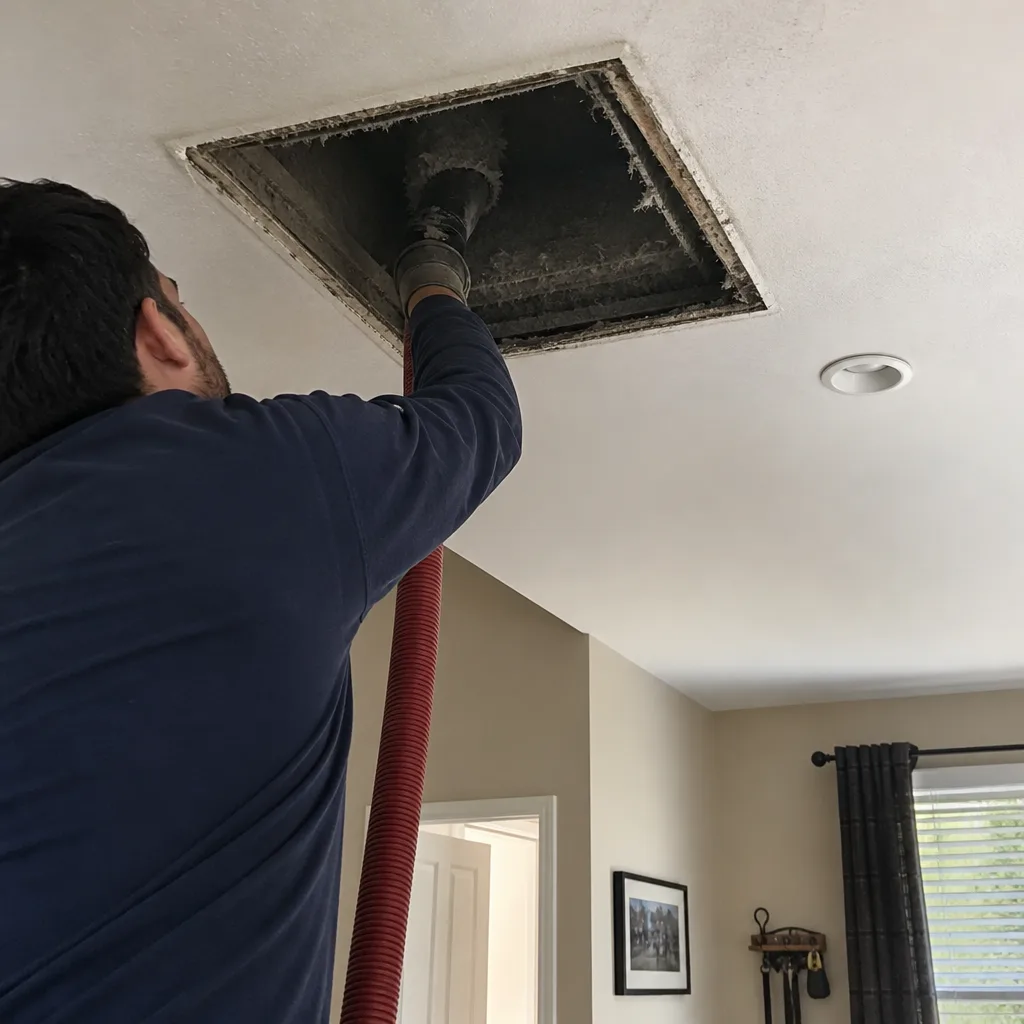 Before
 After
 Before
 After
 Before
 After