
Last updated November 2, 2026
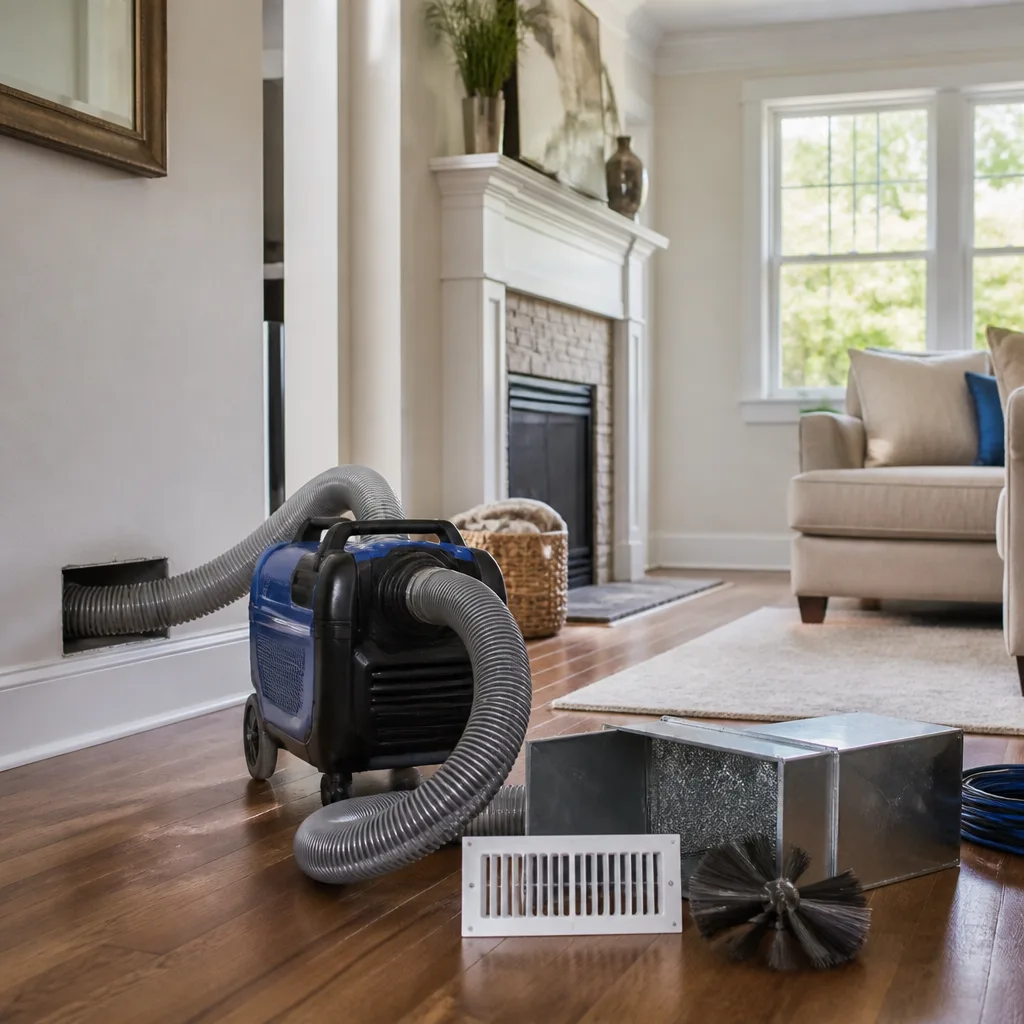 Whole-home duct cleaning
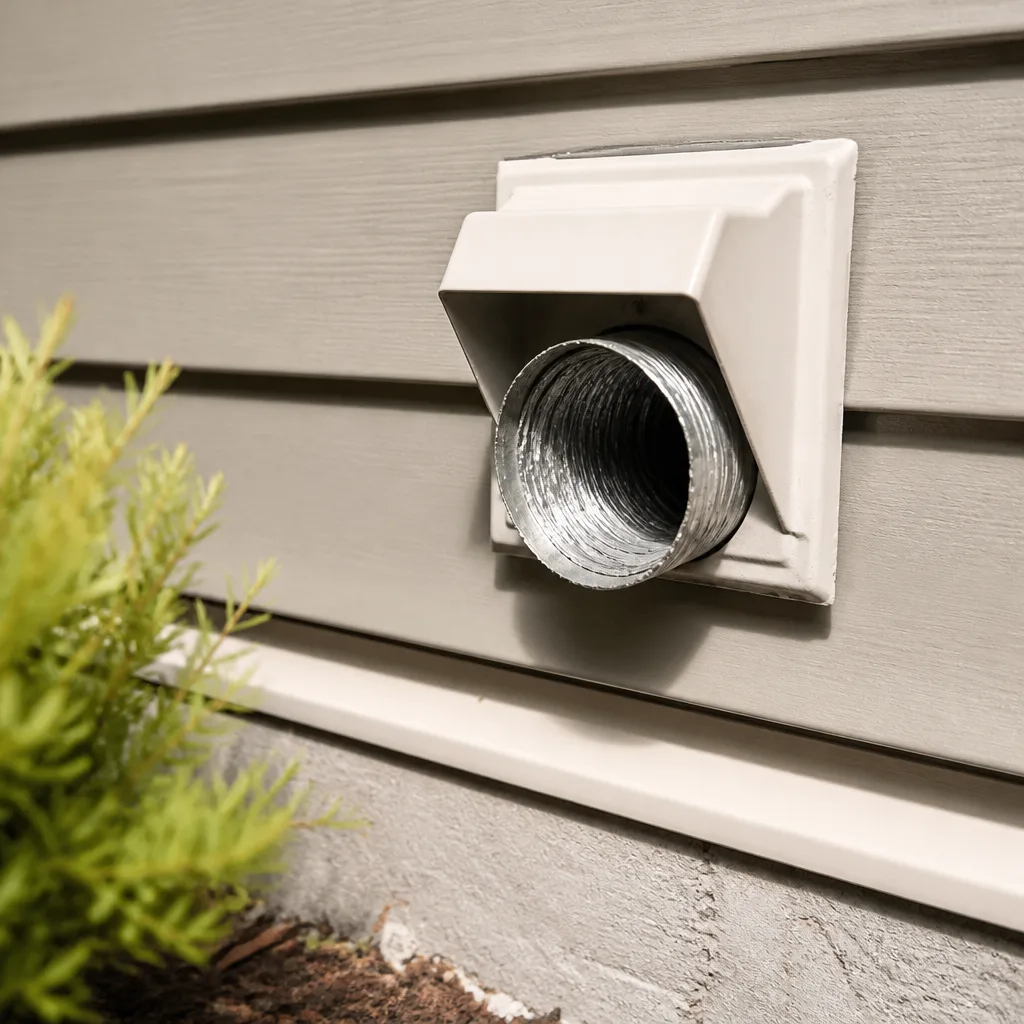 Dryer vent cleaning
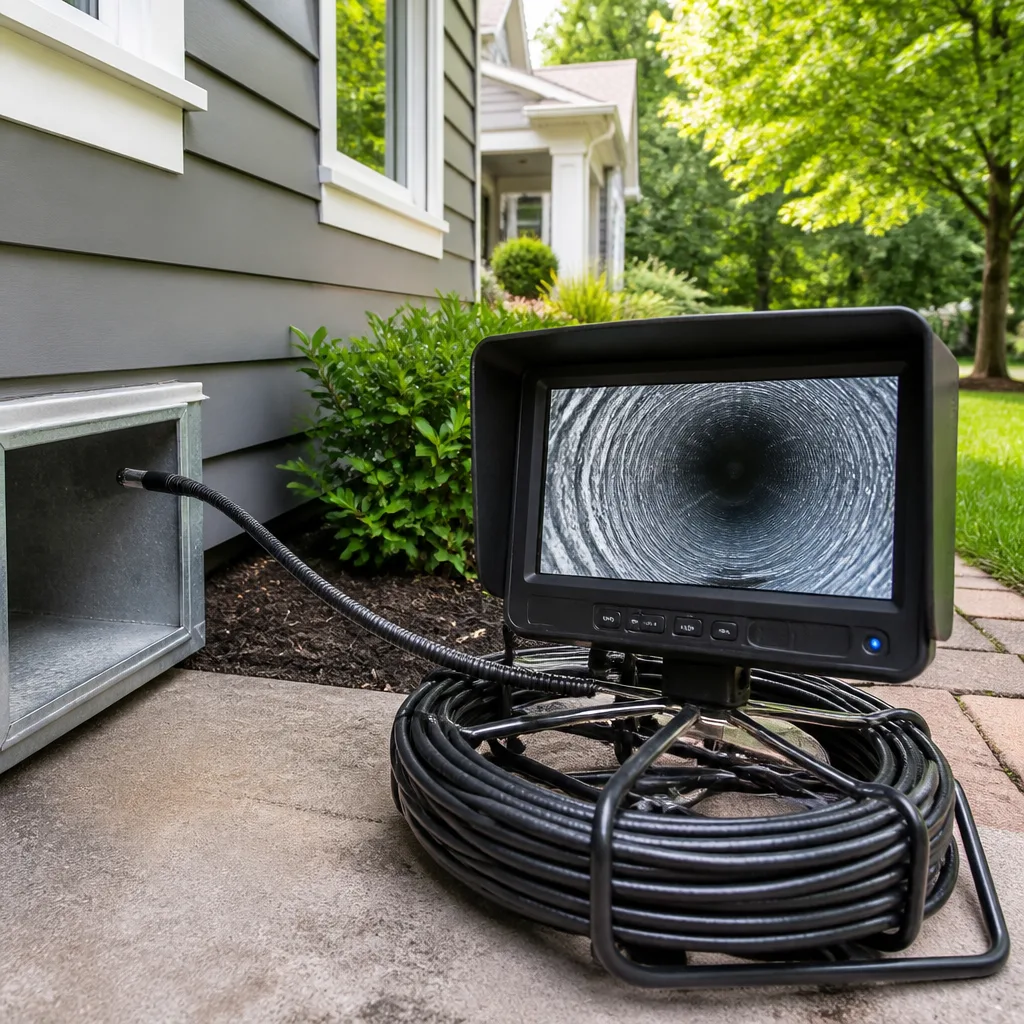 Camera inspection
 Sanitizing & deodorizing
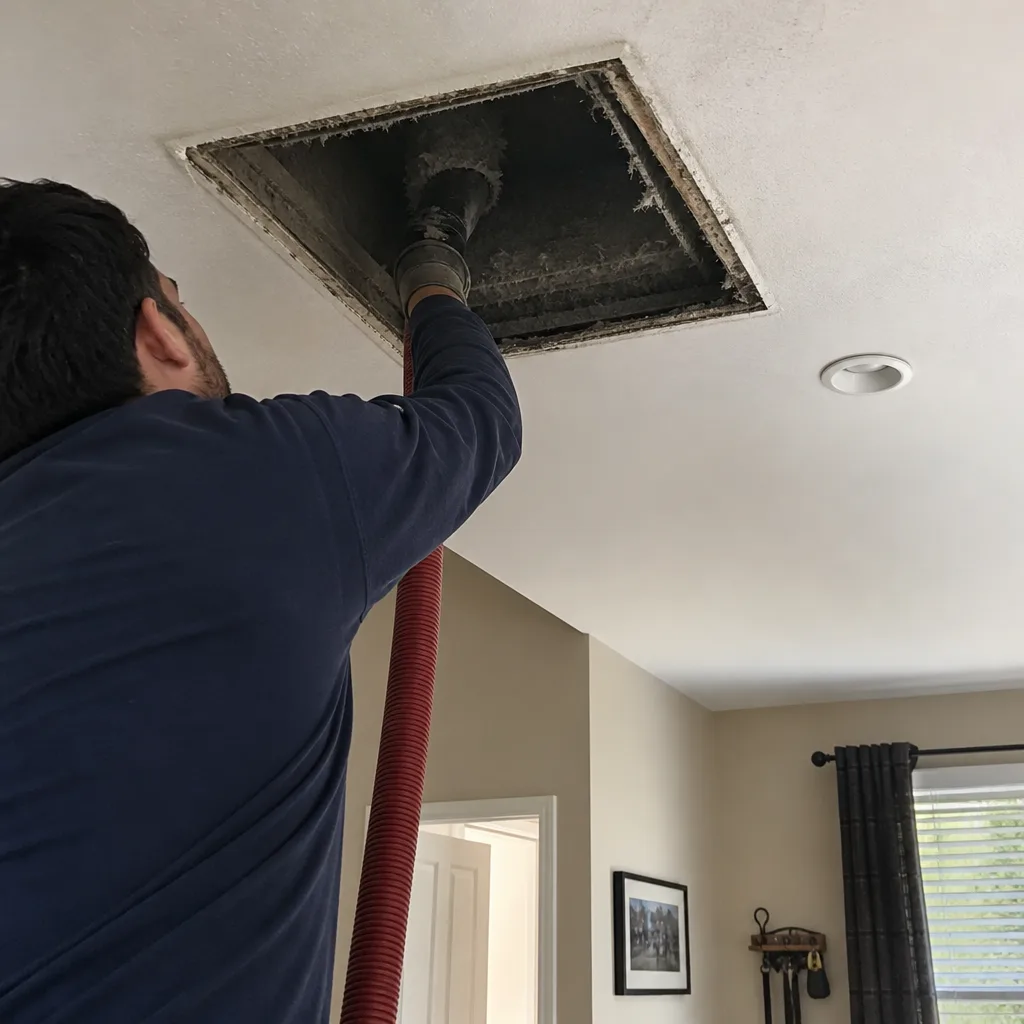
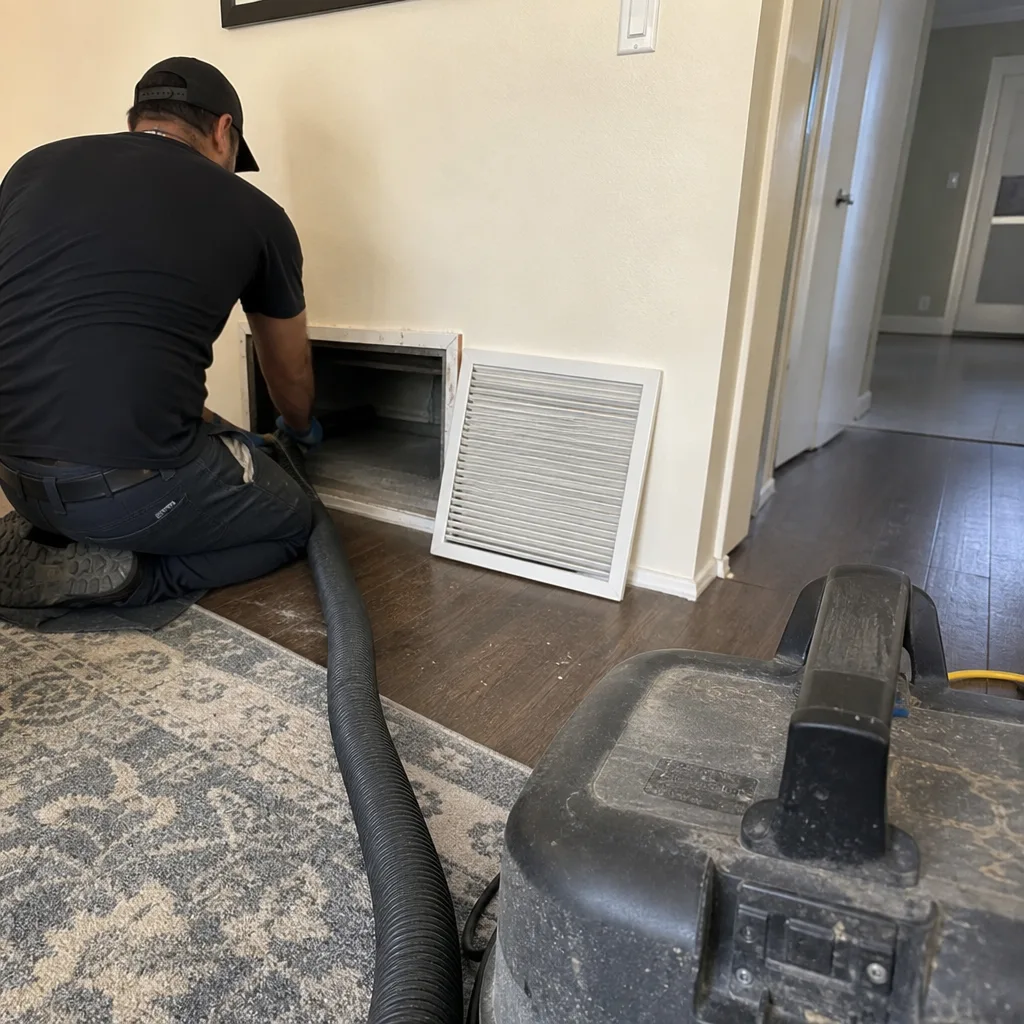
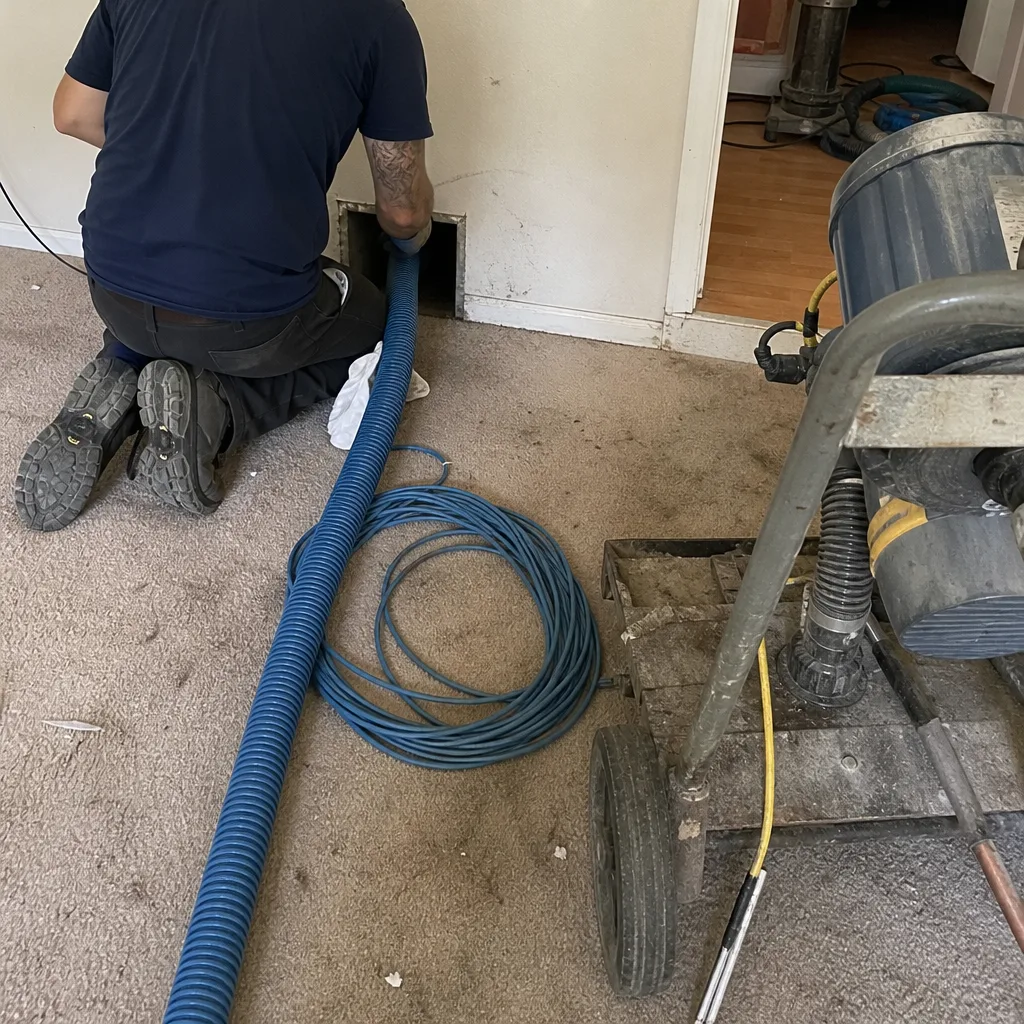
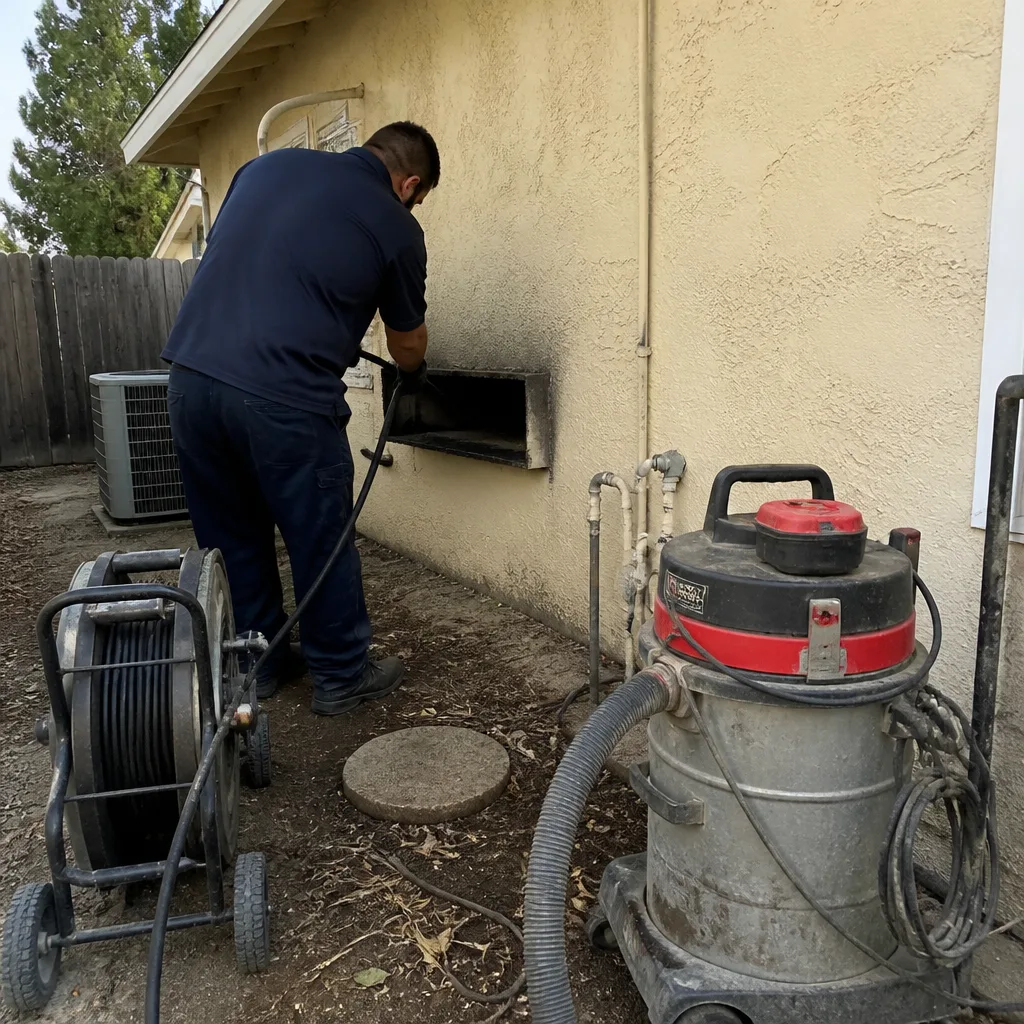
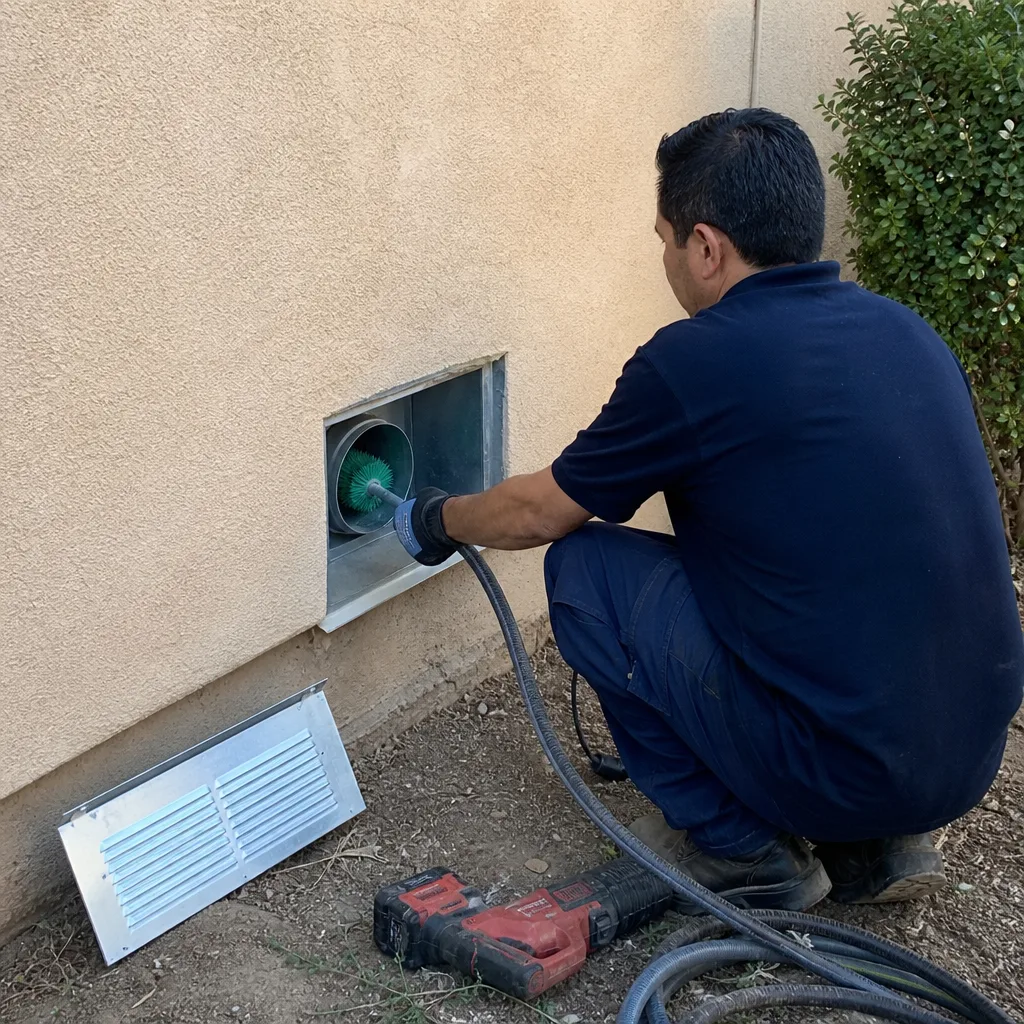
Whole-system duct and dryer vent check with before-and-after photos - you see exactly what came out of your vents
That "$99 whole-house special" is a bait ad - the real number appears once they are in your hallway, or the "clean" is a shop-vac at the register. We photograph the inside of your ducts before and after instead.
Air Duct Cleaning Troubleshooting: Common Problems and How to Fix Them
The most common call any duct cleaning company receives after a job is some version of: “We still smell something.” Or “There’s still dust on the furniture.” It’s an uncomfortable conversation, because the caller is usually bracing for a defensive excuse, and the company is trying to figure out whether the job fell short or the homeowner’s expectations were aimed at the wrong target. Here’s the reality we work with every day in North Sacramento: most post-cleaning complaints are not evidence of a failed cleaning. They’re evidence that the ducts were never the source of the problem in the first place, or that the cleaning exposed a different issue that was hiding underneath the dust. This guide walks you through how to tell the difference between a bad cleaning, a duct system problem, and a source that lives entirely outside your ductwork. By the time you finish, you’ll have a diagnostic framework you can use to describe what you’re experiencing with enough specificity to get the right fix on the first visit.
Styles & brands we work with
- Whole-home duct cleaning
- Dryer vent cleaning
- Camera inspection
- Sanitizing & deodorizing
Quick Answer
If your home is still dusty or has an odor after a professional air duct cleaning, the most likely explanations are: (1) the source was never in the ducts (it’s the coil, drain pan, carpet, or return air leak), (2) the cleaning dislodged debris that takes 2-5 days to settle out, or (3) the cleaning didn’t achieve proper negative pressure and left material behind. A visual inspection with a camera before and after the job, plus a clear understanding of what duct cleaning can and cannot fix, is the only reliable way to tell which situation you’re in.
Table of Contents
- Problem 1: Home Still Dusty After Duct Cleaning
- Problem 2: Musty Odor Persists After Cleaning
- Problem 3: Uneven Airflow Between Rooms
- Problem 4: Ducts Get Dirty Again Quickly
- Room-by-Room Symptom Checklist
- How Equipment Affects Outcomes
- Design Problems vs. Maintenance Problems
- Common Mistakes to Avoid
- When to Call a Professional
- Frequently Asked Questions
- The Bottom Line
Problem 1: Home Still Dusty After Duct Cleaning
This is the single most common post-cleaning complaint, and it’s also the one with the widest range of causes. Before you call the company back, give it three to five days. A proper cleaning with negative pressure agitation will dislodge material that has been sitting in the duct walls for years. Some of that material goes into the vacuum. Some of it becomes airborne for a brief period and then settles. This is normal and temporary. If you’re still seeing fresh dust accumulation two weeks after the job, then something else is happening.
The first question we ask in North Sacramento homes is whether the cleaning actually achieved negative pressure. Negative pressure is the technical term for the condition where the collection system is pulling more air out of the duct than the agitation is pushing into it. Without this, you’re essentially stirring up dust inside the ducts and letting a portion of it escape into the living space. The homeowner can’t always tell the difference during the job. This is exactly why we run camera inspections before and after on every visit, so you can see what left the system rather than taking anyone’s word for it. If your contractor didn’t show you before-and-after footage of your own ducts, you simply don’t know what actually happened in there.
How to Determine the Real Source
If a proper cleaning was performed and dust is still appearing, run through this sequence. We use it with homeowners throughout North Sacramento when complaints persist past the settling window.
- Check the return air path. Pull the return grille off and look at the filter. If the filter is blackened on one side and the return cavity is caked with dust, the ducts are pulling air from a dirty space, usually an attic or crawlspace. No cleaning fixes that. The return system needs to be sealed or rebuilt.
- Inspect the supply registers. Look at the wall or floor around each vent. If there’s a gray smudge pattern radiating outward from the register, that indicates air is spilling around the boot rather than through it. The boot-to-drywall seal has failed, and you’re getting unfiltered air drawn into the living space from the wall cavity.
- Test for bypassing. Close all the supply registers in one room and feel around the edges. If air still moves, the duct connection at the plenum is leaking, and the positive pressure in the system is pushing air into the building cavity instead of the room. This is a duct repair issue, not a cleaning issue.
- Consider the envelope. Older North Sacramento homes, particularly those built before the 1980s, often have enough air leakage through walls and ceilings that outdoor dust makes its way in regardless of duct condition. The ducts are clean, but the house itself is breathing unfiltered air.
Problem 2: Musty Odor Persists After Cleaning
If a musty smell survives a thorough duct cleaning, the odds are high that the source was never in the duct walls. In our experience, the most frequent culprit in Sacramento’s hot, dry summers is the evaporator coil and its drain pan. The coil sits above the furnace or air handler and condenses moisture out of the air whenever the system runs in cooling mode. That moisture creates a perpetually damp environment. Add dust and skin cells that slip past the filter, and the coil becomes a petri dish. The odor moves through the ducts with the air stream, which is why homeowners assume the ducts are the problem. They’re not. They’re just the delivery mechanism.
The fix for coil and drain pan odor is not another duct cleaning. It requires pulling the coil access panel, cleaning the coil with the correct chemical, flushing the drain pan, and often treating the drain line to prevent the biological growth from returning. This is a service some HVAC contractors perform and many duct cleaning companies cannot. At Stonebridge Air Duct Cleaning, we run into this frequently enough in North Sacramento that we’ve built our inspection process to specifically disambiguate it. If the ducts are clean and the odor persists, we look at the coil before we recommend anything else.
Other Odor Sources People Blame on Ducts
- Drain trap evaporation. In Sacramento’s dry season, floor drains in laundry rooms, utility closets, and slabs can dry out. The water seal disappears and sewer gas rises. That gas gets pulled into the return air and distributed through the ducts. The fix is pouring water down the drain, not cleaning the ducts.
- Return air leaking from garage or attic. A return duct that’s pulled apart in a garage will draw in whatever the garage smells like: gasoline, paint, garbage cans. The ducts carry that smell into every room. Duct repair in South Natomas fixes this. Cleaning does not.
- Rodent activity in the ductwork. If an animal has nested or died in the duct system, the odor will be localized but intense. Most often this happens in the return trunk. A camera inspection identifies it immediately. Cleanup requires access and often duct section replacement, not just vacuuming.
Problem 3: Uneven Airflow Between Rooms
A homeowner calls us and says, “Since the cleaning, the master bedroom doesn’t get the airflow it used to.” Sometimes the cleaning is the first time in years anyone has paid attention to the system, and the airflow imbalance was there all along. Other times, the cleaning process exposed a real problem, like a damper that was stuck open and finally broke free, or a flex duct that was never properly supported.
The first thing to understand is that cleaning does not change the volume of air a duct can carry, unless the duct was so heavily contaminated that the cross-sectional area was reduced. That does happen. We’ve opened ducts in North Sacramento that were 60 percent blocked by a combination of construction debris, pet hair, and years of accumulated dust. After a deep clean, the system moves more air. But more air through the same branch runs doesn’t mean equal air to every room. The system’s balancing is a separate issue.
Uneven airflow most often comes down to one of five things: undersized ducts, oversized equipment, a failed or misadjusted damper, a collapsed flex run, or a major air leak at a fitting. None of these are cleaning failures. The air duct cleaning process can restore lost capacity, but it cannot fix a design flaw. That’s why we approach each room as part of a system, not as an isolated complaint.
- Identify the imbalance. Compare the register temperature and airflow in the problem room against a comfortable room with the same exposure. If the air is noticeably weaker and warmer in the problem room regardless of the system’s runtime, the issue is delivery, not cleaning.
- Check the damper. Many North Sacramento homes have manual volume dampers in the branch ducts. They’re often located near the trunk line. If one has slipped, a quarter-turn can restore correct flow. If it’s rusted shut, replacement is needed.
- Inspect the flex duct. Flex duct that sags, kinks, or was run with more than the manufacturer’s recommended bend radius chokes air delivery. It’s visible during a camera inspection. Cleaning will not fix a kink.
- Check for separation. A duct that has separated at a joint inside a wall or attic will push conditioned air into the cavity instead of the room. The airflow drops, the room gets uncomfortable, and the cavity gets mold and moisture problems. This is the kind of issue that air duct repair addresses directly.
Problem 4: Ducts Get Dirty Again Quickly
If you had your ducts cleaned and the system looked dirty again within a year, something is actively feeding contamination back into the system. Ducts do not generate dust. They collect what the air brings them. A clean system that gets dirty quickly is not a cleaning failure. It’s a symptom of a problem upstream.
In North Sacramento, where many homes have attic-mounted air handlers, the most common mechanism is return-side leakage. The return ducts in an attic are under negative pressure when the system runs. Any gap in a joint, seam, or connection will pull attic air directly into the system, bypassing the filter entirely. Attic air in summer is hot, dusty, and depending on the insulation type, full of fine particulates. Homes with blown-in cellulose or fiberglass are especially prone. The dirty air doesn’t come from the ducts. It comes through the ducts.
The second major mechanism is filter bypass. A filter that doesn’t fit, a filter slot that’s oversized, or a homeowner using a flimsy fiberglass filter that catches almost nothing will allow the blower to pull unfiltered air across the heat exchanger and coil, then distribute it through the supply side. The coil loads up, the supply ducts load up, and the system looks dirty again within months.
What does not cause rapid recontamination is the normal operation of a tight, properly filtered system. If the return is sealed, the filter fits, and the system is balanced, a professional cleaning should hold for three to five years in a typical Sacramento Valley climate. If you’re seeing heavy dust in the registers within twelve to eighteen months, push for a duct leakage evaluation. The problem is almost certainly air entering the system where it shouldn’t.
Room-by-Room Symptom Checklist
When something feels wrong with your air system, the most useful thing you can do before calling a technician is walk the house and document what you’re experiencing room by room. Generalities like “the air feels dusty” don’t give us much to work with. Specific observations do. Here’s the checklist we ask homeowners in North Sacramento to work through before we arrive. It also works as a self-diagnostic to help you figure out whether you’re dealing with a system-wide problem or a localized one.
- Bedrooms farthest from the air handler: Are these rooms warmer than the rest of the house in summer and cooler in winter? If so, note the temperature difference compared to the thermostat location. This pattern indicates long run lengths, undersized ducts, or a damper issue.
- Rooms over the garage: Do these rooms smell like the garage? Does the airflow feel weaker than adjacent rooms? Garage-to-duct air leakage is concentrated and distinctive.
- Rooms with high ceilings: Is the dust pattern concentrated high on the walls near the registers? This can indicate throw length problems or boot leakage in the ceiling cavity.
- Bathrooms and laundry rooms: Do these rooms smell musty or damp even when the rest of the house feels fine? Check the drains and the exhaust fans before blaming the ducts.
- Kitchen: Is there a grease film on register faces that recurs within weeks of cleaning? Cooking aerosols are being pulled through the return or settle onto the supply register when the system is off.
- Hallway returns: Are the return grilles black or gray around the edges? This tells you the system is pulling air from the wall cavity, not just the room. It’s a signature of return plenum leakage.
- Any room with a vaulted ceiling: Are there temperature swings that don’t match the rest of the house? Flexible duct runs through unconditioned attic spaces above vaulted ceilings are frequently undersized or damaged.
How Equipment Affects Outcomes
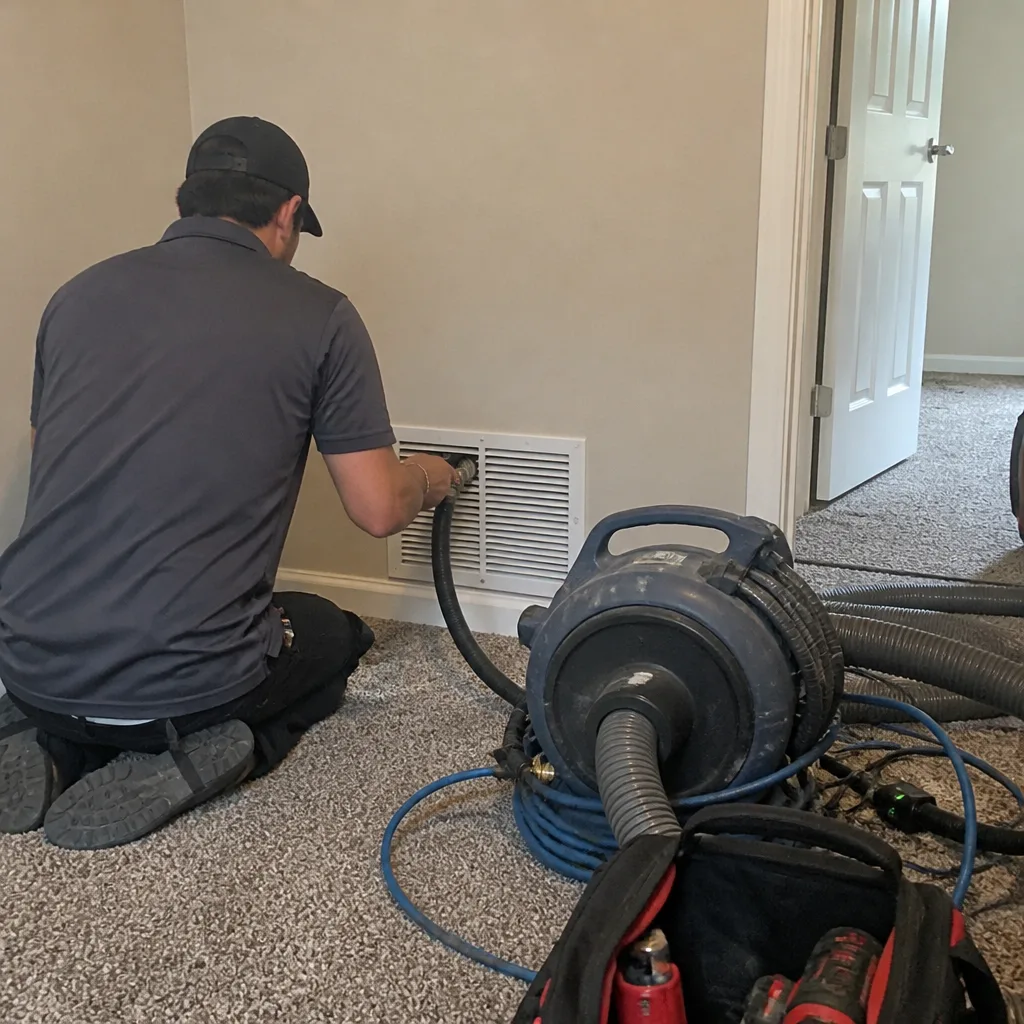
Not all duct cleanings are created equal, and a lot of what separates a good job from a mediocre one comes down to the equipment. A service that shows up with a shop-style vacuum and a brush attached to a drill is not doing the same work as a contractor running negative-pressure collection with professional-grade equipment. The homeowner has no way to know which one they’re getting until the job starts.
At Stonebridge Air Duct Cleaning, we run Rotobrush and Nikro systems on every residential job. These are the brands commercial HVAC contractors specify when they need a system cleaned to a documented standard, not a consumer-grade retail tool. The difference matters because the collection capacity and agitation capability determine whether the debris is actually extracted from the system or just loosened and left behind to settle later. When we inspect a system after a previous cleaning attempt by another company, the post-job complaints usually trace back to inadequate extraction under the claim of a completed cleaning.
There’s also the matter of containment. Cleaning a heavily contaminated system in an occupied home requires managing what becomes airborne during the process. This is where Abatement Technologies equipment comes in. Remediation contractors use containment units to isolate contaminated work areas, and the same principle applies to duct work. If a contractor is agitating years of accumulation out of your ducts without any containment, some of what they’re removing is going into your living room. With proper negative pressure and containment, it goes into the collection unit.
Design Problems vs. Maintenance Problems
A lot of homeowner frustration comes from expecting maintenance to fix design. Duct cleaning is maintenance. It restores the system to approximately as-designed condition. It cannot correct a system that was badly designed, badly installed, or has failed structurally since install. In North Sacramento, where the housing stock ranges from 1950s tract homes to newer Natomas builds, we see both categories regularly.
A design problem is an undersized return, a supply trunk with insufficient cross-section, a flex run that was pulled too tight, or equipment that’s oversized for the house. These issues produce symptoms regardless of how clean the ducts are. The air doesn’t reach certain rooms, the system short-cycles, or the return pulls from spaces it shouldn’t. Cleaning won’t change any of that. The fix requires duct system changes, which fall under air duct repair.
A maintenance problem is debris accumulation, biological growth on the coil, a clogged filter, a dirty blower wheel, or a fallen flex duct from a broken strap. These issues respond to cleaning and component service. The difficulty is that the symptoms of design and maintenance problems overlap, and it sometimes takes a system evaluation to separate them. This is why we run a camera in the ducts on every job. We want to know whether the problem is something we can clean away or something the homeowner needs to know about regardless of whether they hire us.
Common Mistakes to Avoid
- Assuming the cleaning failed because dust settled in the first 48 hours. Some post-cleaning settling is normal. Wait a minimum of five to seven days before declaring the job ineffective. In North Sacramento’s dry season, open windows and running fans shorten the settle-out period.
- Blaming the ducts for every smell in the house. Musty, sewer-like, or chemical odors often originate at the coil, a dry floor drain, or an air leak in the return. If the ducts were camera-verified clean, the source is elsewhere.
- Hiring based on price without asking about equipment. A low-cost bid that uses consumer-grade equipment is not the same service. Ask what collection system and what agitation method the contractor uses.
- Skipping the before-and-after visual verification. If a company claims to have cleaned your ducts but cannot show you footage of the inside of your ducts before and after, you have not actually verified the work.
- Expecting a cleaning to fix airflow imbalance. Cleaning restores what’s there. It does not resize undersized ducts, repair separated joints, or correct a collapsed flex run.
- Neglecting the return side. Homeowners tend to think about supply vents, but the return side is where contamination enters the system. A dirty, leaky return is the primary re-contamination pathway.
When to Call a Professional
If you’ve worked through the checklists in this guide and still can’t pinpoint the source of persistent dust, odor, or airflow issues, that’s the moment to bring in a specialist with camera inspection capability. Specific scenarios that warrant a professional visit include: musty odor that persists more than two weeks after a cleaning, visible dust discharging from supply registers, rooms that remain uncomfortable regardless of thermostat setting, rapid filter loading, or any evidence of animal activity in the ducts. A camera inspection answers questions in minutes that speculation cannot answer in weeks. Stonebridge Air Duct Cleaning offers free estimates in North Sacramento, and we’ll show you footage of your actual ducts, not stock photos. Call (833) 467-4303 to schedule.
If you’re located in the Natomas area specifically, we also provide air duct cleaning in South Natomas and dryer vent cleaning in South Natomas as dedicated services. For structural issues uncovered during inspection, our air duct repair in South Natomas service addresses the problem in the same visit, which most standalone duct cleaners cannot offer.
Frequently Asked Questions
Dust dislodged during a proper duct cleaning typically settles within three to five days. If you’re still seeing new dust accumulation on horizontal surfaces after two weeks, the cleaning may not have achieved adequate negative pressure, or there’s a source of contamination entering the system from outside the ducts.
A musty odor that survives a professional duct cleaning usually originates at the evaporator coil or the condensate drain pan, not in the duct walls. The coil stays continuously damp during cooling season and supports biological growth that produces the odor. The smell travels through the ducts with the air stream, but the source is at the air handler. Call (833) 467-4303 and we can inspect the coil to confirm.
The only reliable way to verify a cleaning is a before-and-after camera inspection of your actual duct system. If the company you hired did not show you footage from inside your ducts both before and after the work, you have no verifiable evidence of what was removed or what remains. Professional-grade equipment matters here, which is why we run camera documentation on every job.
No. Duct cleaning removes contamination and restores lost air capacity, but it does not change the size, layout, or condition of the duct system itself. Uneven room temperatures are typically caused by damper settings, duct leaks, collapsed flex runs, or a system that was undersized from the beginning. Those are repair issues, not cleaning issues.
In the North Sacramento area, where air conditioning runs for months at a stretch during the summer, a properly sealed and filtered system should hold a professional cleaning for three to five years. Homes with smokers, multiple pets, recent renovations, or a known return-system leak may need attention sooner. If you’re noticing dust discharge from your registers between cleanings, there’s a system problem worth investigating before scheduling another cleaning.
The difference is usually the equipment and the process. Companies using consumer-grade vacuums and surface brushing can quote low because their operating costs and outcomes are limited. Contractors running professional-grade extraction systems with proper containment have higher equipment costs and produce verifiable results. In this trade, the adage about getting what you pay for holds more often than not. For an exact quote for your system, call (833) 467-4303.
The Bottom Line
Most post-cleaning complaints don’t mean the cleaning failed. They mean the duct system has another problem that cleaning exposed or that was never addressed in the first place. Dust after a cleaning can be normal settling, or it can be return-side leakage pulling attic air into the system. Musty odor after a cleaning usually lives at the coil, not in the ducts. Uneven airflow is a design or repair issue, and rapid recontamination points to unfiltered air entering the system. A credentialed specialist with camera inspection capability and professional-grade equipment can tell the difference in one visit. If you’re in North Sacramento and need answers, Stonebridge Air Duct Cleaning offers free estimates, clear documentation of your actual ducts, and the full Stonebridge Air Duct Cleaning home service range from cleaning to repair to filtration recommendations.
Written by the team at Stonebridge Air Duct Cleaning, serving North Sacramento since 2014.
See the difference
 Before
 After
 Before
 After
 Before
 After