
Last updated November 2, 2026
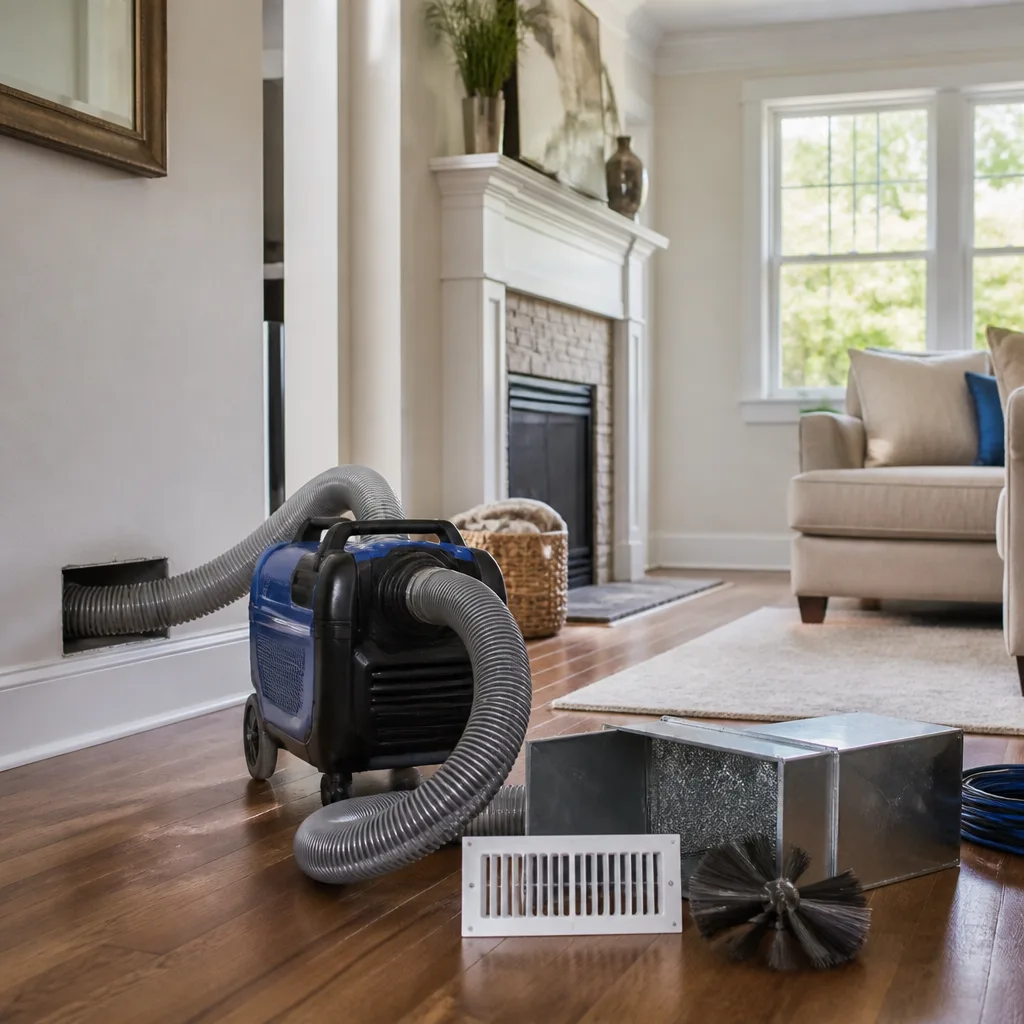 Whole-home duct cleaning
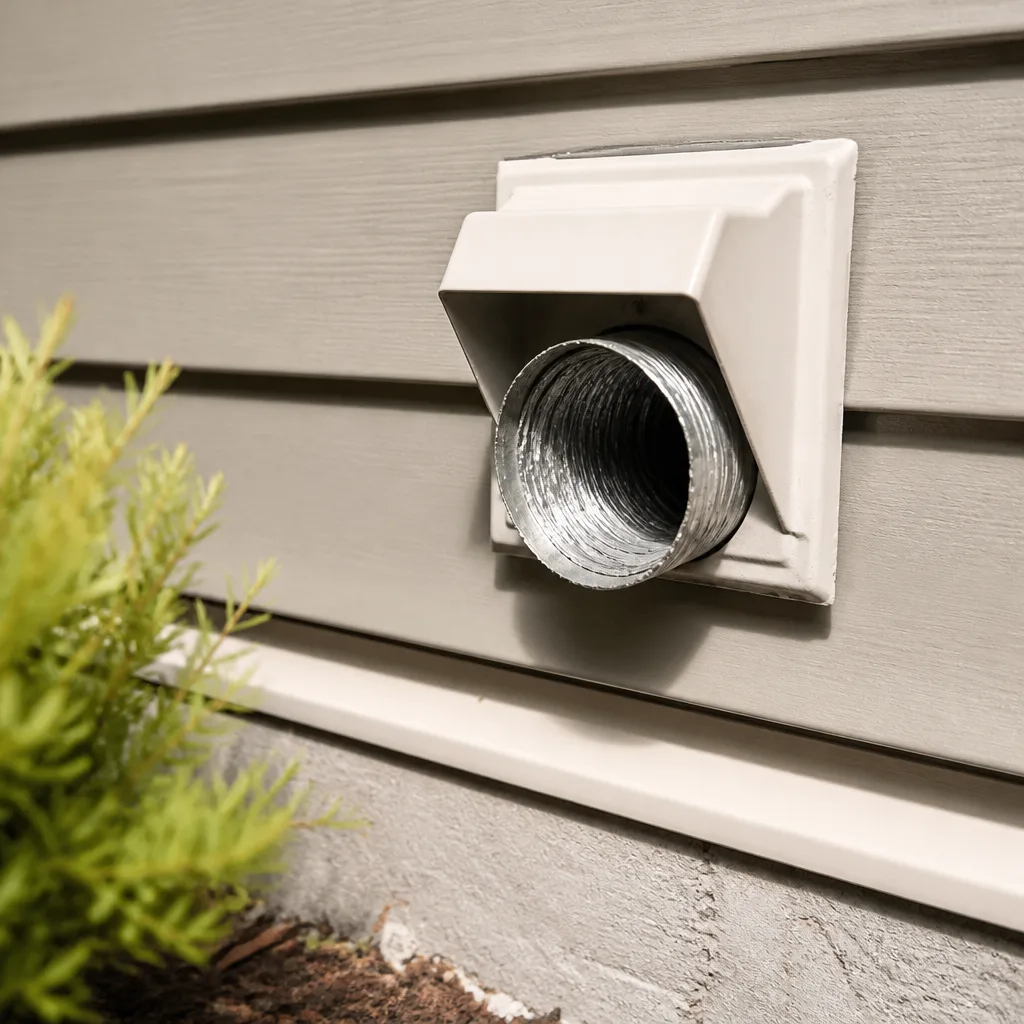 Dryer vent cleaning
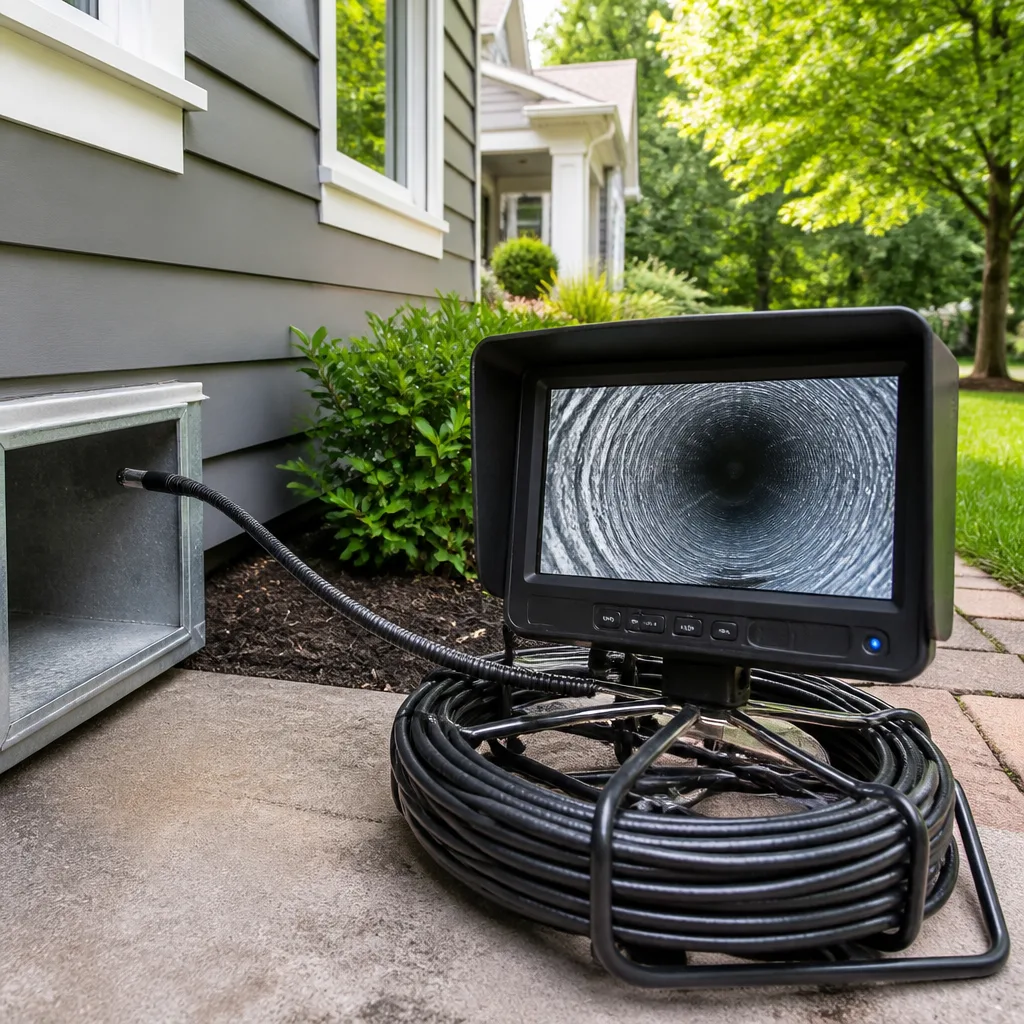 Camera inspection
 Sanitizing & deodorizing
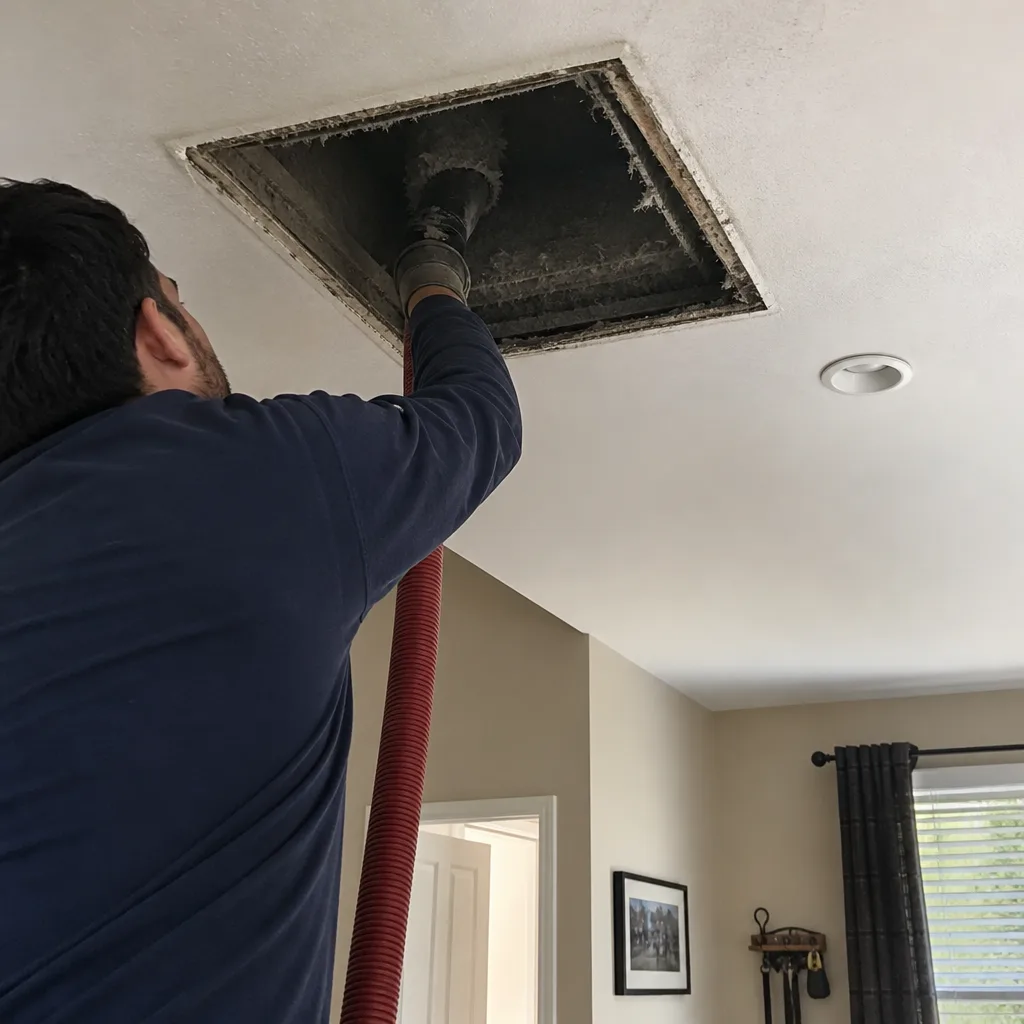
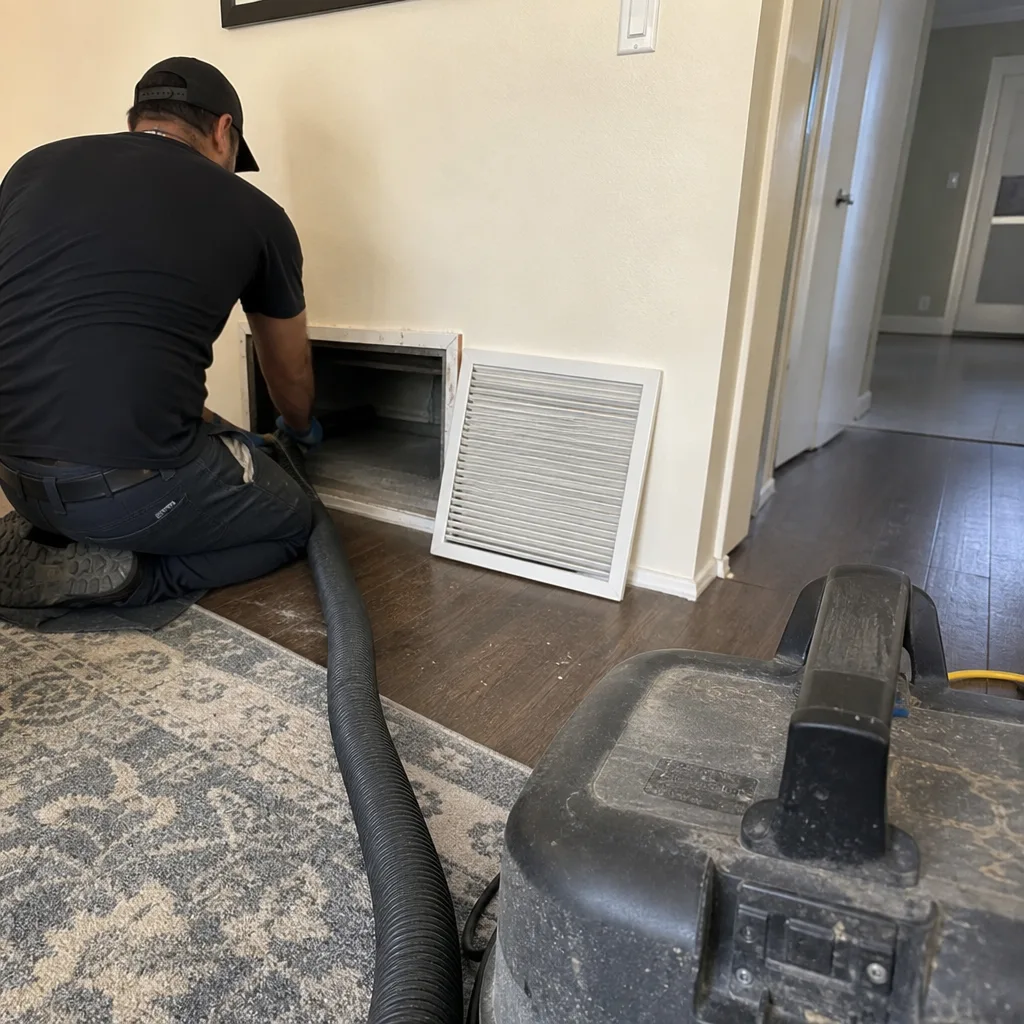
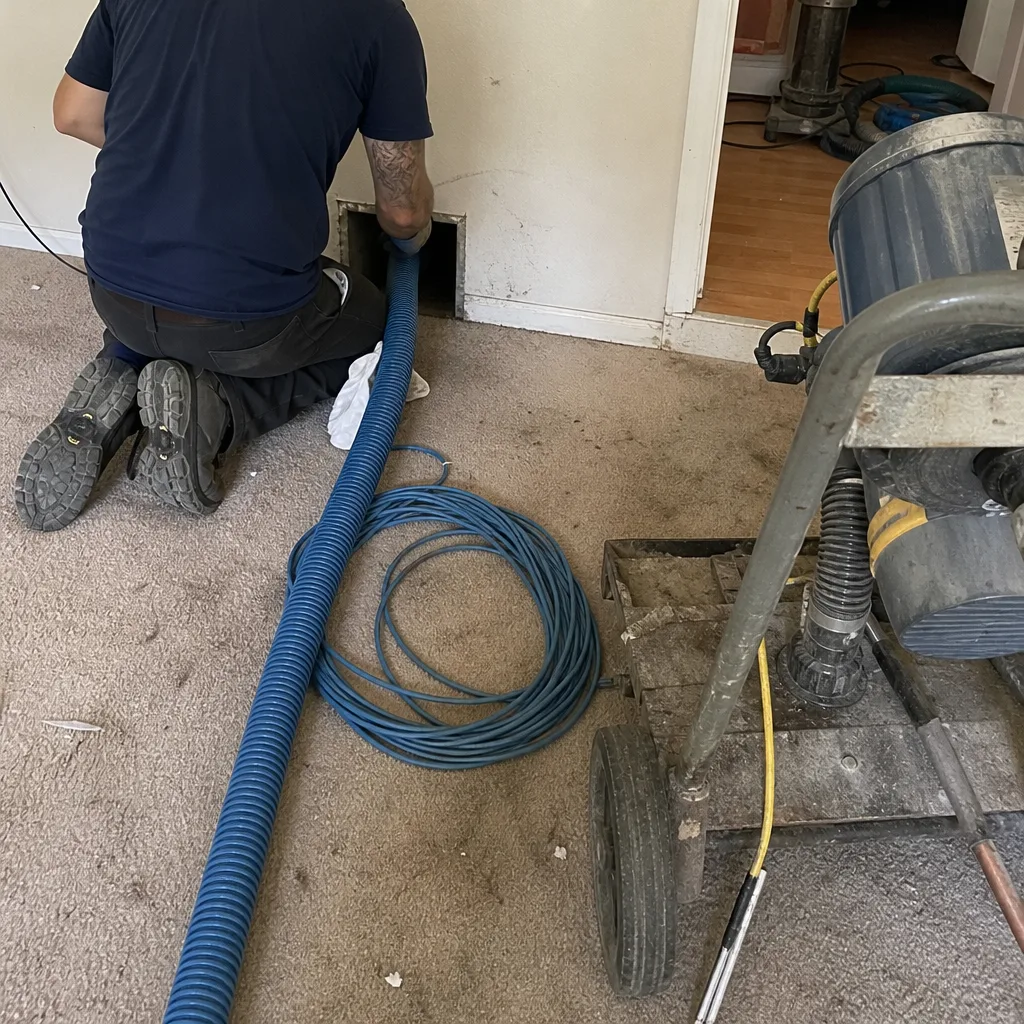
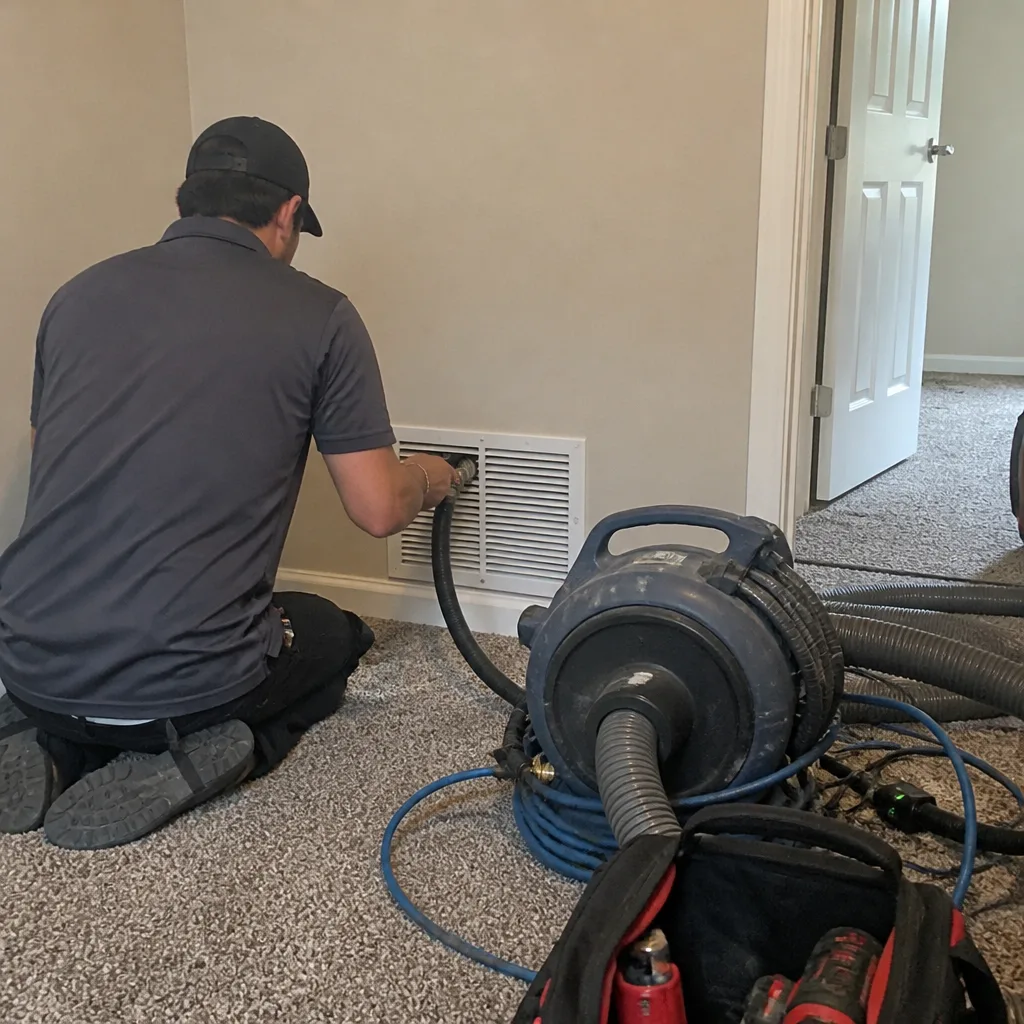
Whole-system duct and dryer vent check with before-and-after photos - you see exactly what came out of your vents
That "$99 whole-house special" is a bait ad - the real number appears once they are in your hallway, or the "clean" is a shop-vac at the register. We photograph the inside of your ducts before and after instead.
Choosing the Right Air Duct Cleaning Brand: A Buyer’s Guide for North Sacramento
The company cleaning your ducts either owns a Rotobrush, an Abatement Technologies unit, or a system assembled from parts, and that single equipment decision affects how thoroughly your ductwork gets cleaned more than any certification, coupon, or “20-point checklist” a contractor lists on a flyer. Most homeowners spend more time researching which dishwasher to buy than which equipment will be dragged into their home to clean the lungs of their HVAC system. Our Complete Air Duct Cleaning Guide for North Sacramento Homeowners walks through the professional equipment landscape, what each major brand does well, and how to use this knowledge to separate specialists from generalists when hiring in North Sacramento.
Quick Answer
The right air duct cleaning brand is less about the company name on the van and more about the equipment name on the truck. Look for a contractor who uses Rotobrush or Nikro agitation-and-collection systems paired with a HEPA-filtered negative air machine like an Abatement Technologies or HEPA-AIRE unit, can show you the equipment before work starts, and offers camera verification of the inside of your ducts before and after cleaning. In North Sacramento, where summer dust and wildfire-season particulates settle in ductwork, Air Duct Cleaning with professional-grade equipment and true HEPA filtration is the single most reliable quality signal a homeowner can verify.
Styles & brands we work with
- Whole-home duct cleaning
- Dryer vent cleaning
- Camera inspection
- Sanitizing & deodorizing
Table of Contents
- The Professional Equipment Landscape: What Actually Gets Used
- Rotobrush: The Agitation Standard in Residential Duct Cleaning
- Truck-Mounted Negative Air Systems: Why They Matter for Sacramento Valley Homes
- HEPA-AIRE, Abatement Technologies, and the Filtration Question
- How to Ask a Contractor About Equipment (and Interpret the Answer)
- Camera Inspection: The Verification Tool Contractors Don’t Talk About Enough
- Why CFM Matters: Suction Capacity Explained Without the Jargon
- What North Sacramento Homeowners Specifically Need to Know
The Professional Equipment Landscape: What Actually Gets Used
Walk through any supply yard serving HVAC contractors in the Sacramento region and you’ll see the same pattern repeat: the companies that last in this trade invest in equipment that costs real money, and the companies that rotate through new names every few years often don’t. Air duct cleaning equipment falls into two broad categories. The first is the collection system, which creates the suction that pulls loosened debris out of your ductwork. The second is the agitation system, which physically dislodges the dust, hair, and construction debris that has adhered to duct walls over years of airflow. A company that only has one without the other is doing half a job, no matter what its brochure says.
In practice, the professional-grade collection systems you’ll see referenced in contractor specifications are truck-mounted negative air machines or portable HEPA-filtered negative air units from manufacturers like Abatement Technologies. These are the same class of equipment used in hospital renovation containment and mold remediation projects, where cross-contamination isn’t a cosmetic concern but a genuine health protocol. The agitation side is where Rotobrush and Nikro systems enter the picture, using rotating brush heads and compressed-air wands to break up the debris layer that suction alone cannot remove. Consumer-grade equipment, by contrast, typically means a shop vacuum attached to a flexible hose, a portable unit sold at hardware stores, or a “negative air” machine that lacks true HEPA filtration. The difference is measurable in cubic feet per minute of airflow and in what your ducts look like after the job.
Why does this matter for a North Sacramento homeowner? Because our regional housing stock includes a mix of 1960s and 1970s ranch-style homes with long trunk lines, newer construction in the Natomas basin with flexible duct runs, and older Midtown-adjacent properties with decades of accumulated debris. Each of these configurations responds differently to different equipment types. A company equipped with only one tool is betting that your home fits their tool, not the other way around. When you hire a duct cleaning company, you’re effectively hiring whatever equipment they’ve invested in. You should know what that is before you sign anything.
Rotobrush: The Agitation Standard in Residential Duct Cleaning
Rotobrush is the brand name most often cited by contractors who have committed to residential duct cleaning as a core discipline rather than an add-on service. The system uses a rotating brush head attached to a flexible shaft that feeds through your ductwork from a single access point, scrubbing the interior surfaces while a collection unit applies continuous suction. It’s a real-time agitation-and-collection process, not a two-step “blow it loose, then vacuum it out” approach. The difference matters because debris that gets blown loose but not captured simply relocates to another part of your system or, worse, into your living space.
We use Rotobrush equipment at Stonebridge Air Duct Cleaning home for most residential jobs because it matches the reality of how Sacramento Valley homes are built. The access points in most North Sacramento homes are limited to a few register openings. Long or winding flexible duct runs limit what a straight vacuum hose can reach. A rotating brush system navigates those bends and reaches the full length of the run while actively capturing what it dislodges. It’s not a magic wand, and it won’t fix a duct system that was poorly designed in the first place, but it’s the right tool for the condition and configuration of ducts in most of the homes we service.
A practical note: “Rotobrush” has become something of a generic term among contractors, the way “Kleenex” became shorthand for tissues. Ask the specific question: “Which model Rotobrush do you run?” A company using the brand should be able to answer immediately. If they say “we use a rotating brush” but can’t name what it is, you’re not talking to a company that owns professional-grade equipment.
Truck-Mounted Negative Air Systems: Why They Matter for Sacramento Valley Homes
Truck-mounted negative air systems represent the heavier end of the equipment spectrum. They connect to your ductwork through large-diameter hoses and create substantial negative pressure, effectively turning your entire duct system into a vacuum chamber while technicians work from access points inside the home. The advantage is raw suction power: a truck-mounted unit can move significantly more air, measured in CFM, than any portable machine that gets carried through your front door. The disadvantage is that they’re impractical for smaller homes, tight urban lots, and many of the access limitations common in older North Sacramento neighborhoods.
For larger homes with extended duct runs, especially the 3,000-plus-square-foot properties in South Natomas and the newer developments along the I-80 corridor, a truck-mounted system provides the suction capacity to maintain negative pressure across a long trunk line while cleaning is happening at the far end. The physics matter quite a bit here. When negative pressure drops, dislodged debris settles before it reaches the collection point. That means debris loosened in the bedroom wing may never actually leave the house if suction is inadequate. It simply waits for the next time your blower kicks on and redistributes it. For more detail on what this means for homes in that area specifically, our guide to Air Duct Cleaning in South Natomas covers the housing stock and duct configurations we see most often there.
The honest position: not every home in North Sacramento needs a truck-mounted system. A well-calibrated portable system with proper HEPA filtration handles most single-family homes effectively. But if you’re comparing two quotes and one company is bringing a truck-mounted negative air machine while the other is bringing a portable consumer unit, you should expect the truck-mounted quote to be higher and the cleaning to be more thorough. The equipment investment difference is real, and it usually shows in the result. You’re paying for extraction capacity.
HEPA-AIRE, Abatement Technologies, and the Filtration Question
The negative air side of duct cleaning separates into two tiers based on filtration. Abatement Technologies and HEPA-AIRE produce the units we and many commercial contractors specify for jobs where air containment matters: post-renovation, mold-suspect, heavy pet dander, or smoke contamination from wildfire seasons like the ones Sacramento has experienced repeatedly in recent years. These machines pull air from the duct system, pass it through a multi-stage filter stack ending in true HEPA media, and exhaust clean air. The point is not just removing debris from ducts but preventing what gets removed from redistributing through the home.
Filtration quality is where budget equipment loses in ways homeowners rarely think to investigate. The question to ask is not simply “Do you have a HEPA filter?” but “Is it a true HEPA filter, and on which machine?” A portable negative air unit with a genuine HEPA final stage costs several thousand dollars. A shop vac with a HEPA-label bag does not perform the same function, even if both can claim to contain the letters. This distinction matters most in North Sacramento homes that experience the fall dust season, construction booms that stir up silica dust, and the smoke particulates that settle inside return ducts during wildfire events. Your ducts are, effectively, the last filtering surface before air reaches your living room. What you’re cleaning them with determines whether that dust leaves the house or gets aerosolized in it.
Abatement Technologies equipment also speaks to a company’s ability to handle more than routine maintenance. If a contractor brings remediation-grade containment capability, they’re prepared for the job that turns up complications, like discovering a disconnected return duct pulling crawlspace air or an abandoned duct run full of construction debris. These discoveries happen regularly in North Sacramento’s older housing stock, and the right response is different from the routine-cleaning response. Ask yourself whether the company you’re considering is equipped for what your ducts actually are, not just for what a clean system looks like.
How to Ask a Contractor About Equipment (and Interpret the Answer)
This section gives you a practical script. Most contractors are not accustomed to being asked these questions, which is itself informative. A specialist will answer without hesitation. A company assembled around a van and a portable vacuum will deflect.
- Ask: “What specific equipment do you use for agitation and collection?” Listen for a brand name and an immediate answer. Rotobrush, Nikro, Abatement Technologies, HEPA-AIRE. If the answer is “professional equipment” or “whatever the job requires,” that’s an evasion, not an answer. The correct response to this question is specific and short.
- Ask: “Can I see the equipment when you arrive, before work starts?” A company that owns professional-grade tools should be proud to show them. If the technician unloads a small portable unit that looks like it came from a home improvement store, you now have the answer their phone quote wouldn’t give you.
- Ask: “Do you use camera inspection before and after?” A yes answer indicates a verification standard. There is no legitimate reason to decline this in 2026. Camera inspection equipment has existed for decades and costs the company nothing per use. If a contractor can’t show you inside your own ducts, ask yourself what the invoice is actually for.
- Ask: “What’s your CFM rating on the collection unit?” If you get a blank look, that’s your answer. Professionals who understand suction capacity think in these terms. For context, consumer-grade equipment typically moves a few hundred CFM. Professional portable units start at 1,000-plus CFM, and truck-mounted systems can exceed several thousand. More on this in the CFM section below.
The pattern here is not about being difficult for its own sake. It’s about establishing whether the company operates on a standard of verifiable work or a standard of “trust us.” In an industry with a documented reputation for bait-and-switch pricing and vague service definitions, verification is the only meaningful differentiation. A company that volunteers its equipment brands, shows you the machines, and films inside your ducts before and after is operating from an entirely different set of assumptions than one that doesn’t.
Camera Inspection: The Verification Tool Contractors Don’t Talk About Enough
Camera inspection is the duct cleaning industry’s version of the before-and-after photo, except it’s inside your walls and under your floors, where you can’t otherwise see. A professional duct camera snakes through your ductwork and records what the interior surfaces actually look like: dust accumulation, debris, disconnected seams, animal intrusion, or the grime that accumulates around registers. The image quality varies by equipment tier, but even a basic inspection camera answers the question that no amount of reassurance can: what’s actually in there?
The most honest use of camera inspection is verification after cleaning. Our technicians run a camera through duct runs after the cleaning pass to document that surfaces are clear, which serves two purposes. It gives the homeowner proof that the work happened and was complete. And it catches what cleaning alone won’t fix, namely structural issues like separated joints, crushed flex runs, or return leaks pulling attic or crawlspace air into the system. That second category is where Air Duct Repair in South Natomas enters the picture. Most duct cleaning companies will hand you a “needs repair” finding and wave goodbye; a specialist can address the problem in the same visit with the right fittings, mastic, or flex replacement. That full-scope capability is rare in this market.
When you’re evaluating contractors in North Sacramento, treat camera inspection as a non-negotiable. The cost to the company is minimal once they own the camera. The cost to you of skipping it is hiring a cleaning company that may have done a thorough job or may have done nothing at all. You’ll know within minutes when the camera goes in. The difference between a duct system that’s actually clean and one that was simply advertised as clean is visible on a monitor.
Why CFM Matters: Suction Capacity Explained Without the Jargon
CFM stands for cubic feet per minute, and it’s the unit of measurement for how much air a collection system moves. In duct cleaning, CFM is the difference between debris being pulled out of your home and debris being stirred up and left to settle elsewhere. It’s the single most objective number for comparing equipment classes, which is why it’s worth understanding even if you never plan to inspect a machine yourself.
Here’s the practical breakdown as a numbered reference:
- Consumer-grade shop vacuums and small portable units: typically 100 to 500 CFM. These can clean the first few feet of a duct run near the register but lack the suction to maintain airflow velocity through the full length of a typical North Sacramento trunk line. Debris dislodged beyond the effective reach simply resettles, which is worse than if you’d done nothing.
- Professional portable negative air units: 1,000 to 2,000-plus CFM, with true HEPA filtration as the standard configuration from manufacturers like Abatement Technologies and HEPA-AIRE. This is the workhorse class for single-family residential cleaning across Sacramento Valley housing stock. These units sustain negative pressure through long runs and filter exhaust air before it re-enters the living space.
- Truck-mounted systems: 3,000-plus CFM and often significantly higher. These are the heavy-application tools, appropriate for very large homes, extended commercial-style duct layouts, or systems with severe contamination. The trade-off is access: the truck parks nearby and hoses run to your duct system, which isn’t always practical on tight North Sacramento lots or multi-story properties with limited exterior access.
The way to use this information in a phone call is simple: ask the contractor what CFM their collection unit is rated for. An honest specialist will know the number. A generalist will pause, repeat the word “powerful,” or reference “strong suction.” That distinction is worth more than any online review. It tells you whether the person on the other end of the phone understands the physical mechanism behind what they’re selling. And if they don’t understand suction, they can’t be trusted to clean ducts.
What North Sacramento Homeowners Specifically Need to Know
North Sacramento’s housing stock spans several eras, each with distinct duct system characteristics. The neighborhoods around Del Paso Heights and Old North Sacramento include many post-war homes with metal trunk lines run through crawlspaces, where decades of dust, rodent activity, and deferred maintenance settle. The newer planned communities in the Natomas basin feature flexible duct runs through attic spaces, where insulation disturbance, heat damage, and construction debris from the building boom are common findings. Each configuration responds differently to cleaning methodology, and a contractor who doesn’t adjust approach based on what they find is working to a script, not to your home.
The Sacramento Valley climate contributes two specific factors. The dry summer season generates continuous fine dust that enters homes through windows, doors, and return-air leaks, much of which ends up cycling through the HVAC system and settling in ductwork. The wildfire seasons that have become part of life in Northern California introduce smoke particulates that accumulate in the same duct interiors. Neither of these problems is visible from your living room, but both are measurable inside your ducts, and both respond to professional-grade cleaning with proper filtration. This isn’t about generic “indoor air quality” language; it’s about the specific particulate load that North Sacramento homes carry.
One more locally specific point: many homes in this area run their air conditioners for six-plus months per year. That heavy runtime means the return side of the duct system sees significant continuous airflow, which deposits more material on return ducts than in homes in cooler climates. A cleaning company that doesn’t prioritize the return side, or that can’t reach return drops that are built into walls rather than accessible through floor registers, is leaving the most contaminated part of your system untouched. When you get a quote, ask specifically how the return side will be addressed. The answer tells you a lot.
If you’re in the Natomas area, our service area detail at Dryer Vent Cleaning in South Natomas covers additional specifics about how lint accumulation and vent configuration interact in that housing stock. Dryer vent cleaning is a related but distinct service, and it matters to this guide because a company that treats dryer vents as an afterthought is often a company that treats duct cleaning the same way.
Common Mistakes to Avoid
- Hiring on price alone. Duct cleaning quotes in North Sacramento vary by hundreds of dollars, and the difference is almost always equipment and thoroughness. A $99 whole-house special is not a discount on the same service; it’s a different service, usually performed with a portable vacuum and a checklist, not professional-grade agitation and extraction equipment.
- Accepting “professional equipment” as an answer. Every company claims professional equipment. The question is whether they can name the brand and model. A company that owns Rotobrush, Nikro, or Abatement Technologies equipment will tell you immediately, because they paid real money for it and it differentiates them.
- Choosing a generalist HVAC company for duct cleaning. There are excellent HVAC companies in Sacramento, but duct cleaning is a separate discipline with separate equipment. A company that installs furnaces, services AC units, and does duct cleaning “on the side” is rarely duplicating the equipment investment of a dedicated duct cleaning contractor.
- Skipping camera verification. If you don’t see inside your ducts before and after, you’re paying for a claim, not a result. Camera inspection should be standard, not an upsell.
- Ignoring the repair question. Duct cleaning often reveals structural problems: disconnected joints, crushed flex, return leaks. If your cleaner can’t repair what they find, you’re now hiring a second contractor. Ask upfront whether repair is part of the service capability.
- Treating all equipment brands as equivalent. Rotobrush and Nikro are both legitimate professional brands, but they’re different systems suited to different conditions. Abatement Technologies and HEPA-AIRE are negative air manufacturers with different performance tiers. A contractor should be able to explain why they run what they run, for your specific home type.
See the difference
 Before
 After
 Before
 After
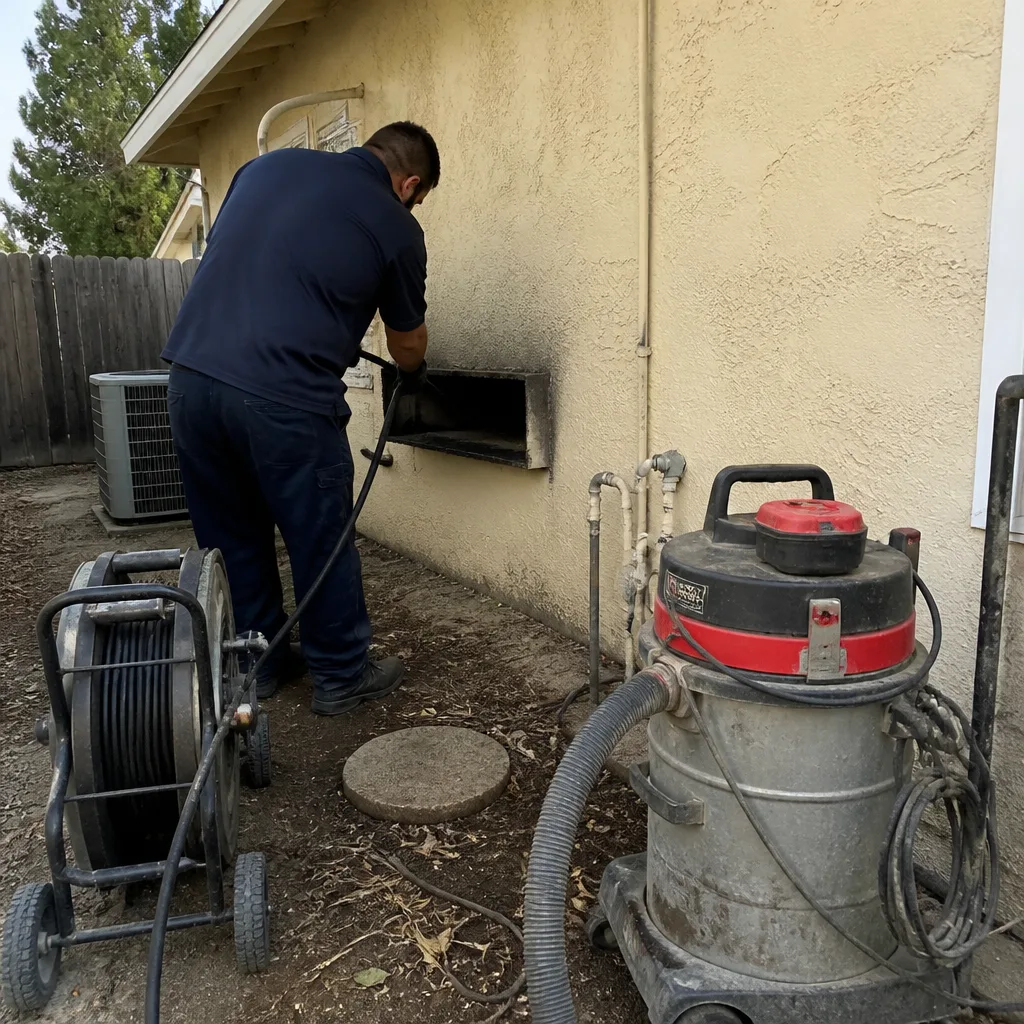 Before
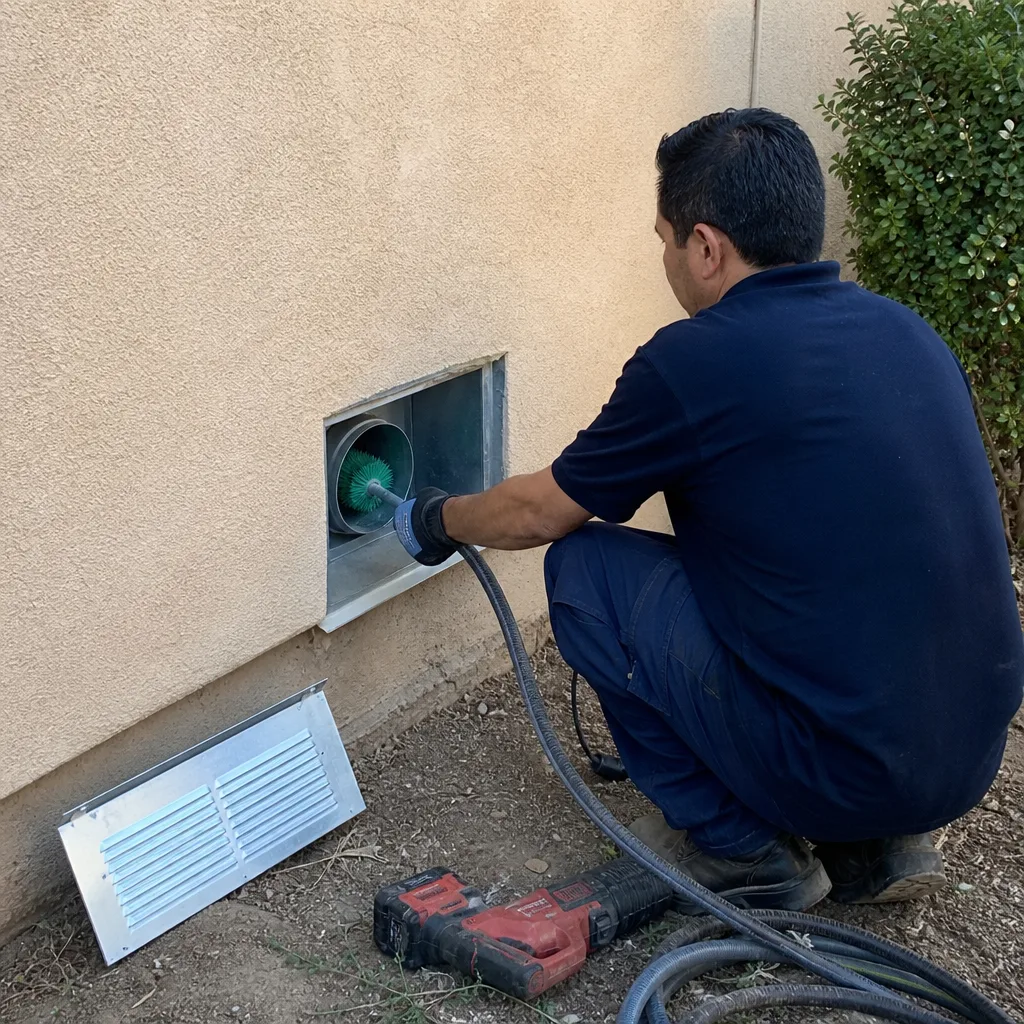 After
When to Call a Professional
Call a duct cleaning specialist when you see visible dust output from registers immediately after cleaning surfaces in your home, when rooms smell musty regardless of how recently the HVAC filter was changed, when allergy symptoms worsen during heating or cooling season, when a renovation project has filled your home with drywall or flooring dust, or when you’ve never had the ducts cleaned in a home you’ve owned for several years. These are all signs that the duct system is carrying more than conditioned air. A professional with proper equipment and camera verification can show you what’s actually happening inside the system and address it properly. For more guides & resources, explore our blog. Stonebridge Air Duct Cleaning offers free estimates in North Sacramento; call (833) 467-4303 to schedule an equipment walkthrough and inspection.
Frequently Asked Questions
For a typical single-family home in North Sacramento, professional duct cleaning with legitimate negative air equipment and camera verification ranges from approximately $350 to $800, depending on home size, number of systems, accessibility, and the condition of the ductwork. Homes with multiple HVAC systems or severe contamination will run higher. Be wary of quotes under $200 for whole-house cleaning; at that price, the company is not running professional-grade equipment or paying a technician to do the job properly. Call (833) 467-4303 for a specific quote for your home.
The price difference is almost always equipment and scope. A company quoting $99 or $149 is typically running a portable consumer-grade vacuum with a brush attachment, cleaning accessible register openings only, and spending under an hour in your home. A company quoting $400 to $800 is running professional negative air equipment with true HEPA filtration, agitating the full length of each duct run, addressing the return side properly, and verifying the result with a camera. You’re not paying for a better version of the same thing; you’re paying for a different thing entirely, and the cheap version often leaves ducts visually unchanged.
Camera inspection before and after is the verification standard. A professional company will run an inspection camera through your duct system at the start to document what’s present and again after cleaning to show the result. You should see visible before-and-after differences, not just a verbal assurance. If a company doesn’t offer camera verification, treat that as a red flag and call another contractor.
For most North Sacramento homes, every 3 to 5 years is a reasonable interval, but several factors pull that number shorter: homes with pets that shed heavily, homes where windows are open frequently during our dry season, homes that experienced recent renovation work, and homes in wildfire-smoke-affected areas. If you just moved into a previously owned home and have no service history, start with an inspection. A camera check will tell you exactly where you stand, without needing to guess based on time intervals.
Equipment brand matters because it’s one of the few objective, verifiable signals of capability in an industry where quality is otherwise hard to assess from the outside. Rotobrush and Nikro represent specific agitation-and-collection methodologies with known performance characteristics. Abatement Technologies and HEPA-AIRE represent real HEPA filtration in negative air machines. A company that owns and operates these tools has made a capital investment that demonstrates a commitment to this specific trade, and that commitment shows up in the result. A company running consumer-grade equipment simply cannot duplicate what professional systems do.
Duct cleaning can remove the accumulated organic material and dust that holds moisture and contributes to musty odors, but it won’t fix the underlying moisture source if one exists. That’s a separate issue, often related to air handler drainage, crawlspace humidity, or a return leak pulling moist air into the system. A proper duct cleaning with camera inspection will identify whether the odor source is inside the ductwork itself or coming from elsewhere in the system, which helps you direct the repair effort correctly. If duct interiors show visible microbial growth, remediation-grade treatment may be needed, which is a different scope than routine cleaning.
The Bottom Line
You can’t judge a duct cleaning company by its website copy or its coupon offers, but you can judge it by the equipment it runs. Brands like Rotobrush, Nikro, Abatement Technologies, and HEPA-AIRE are meaningfully different from consumer-grade alternatives in suction capacity, filtration quality, and what they can actually accomplish inside your specific North Sacramento home. Ask for brand names, ask for camera verification, and ask about repair capability. The company that answers those questions clearly is the one that earns the job. The one that doesn’t is telling you something too.
Written by the team at Stonebridge Air Duct Cleaning, serving North Sacramento since 2014.